Space Exhibition
A captivating visualization of the solar system, presenting the planets both from a cosmic perspective and from their surfaces.
This project was created to present the solar system through both scientific accuracy and artistic interpretation. Each planet is visualized from space and from its surface, revealing the contrast between cosmic scale and planetary detail.
Beginning at Neptune and moving toward the Sun, the journey highlights the distinct atmosphere, light and texture of each world. The work transforms astronomy into an immersive experience, using motion, light and sound to bring distant worlds closer to human perception.
Designed to unite knowledge and emotion, it tells the story of our galaxy as a continuous journey from the frozen edge of space to the radiant core of the Sun.
- Client
- Infinia
- Year
- 2025
- Role
- 3D Artist · Immersive Content
- Tools
- Unreal Engine 5
- Blender
- After Effects
- HeavyM
In the room
One room, nine worlds
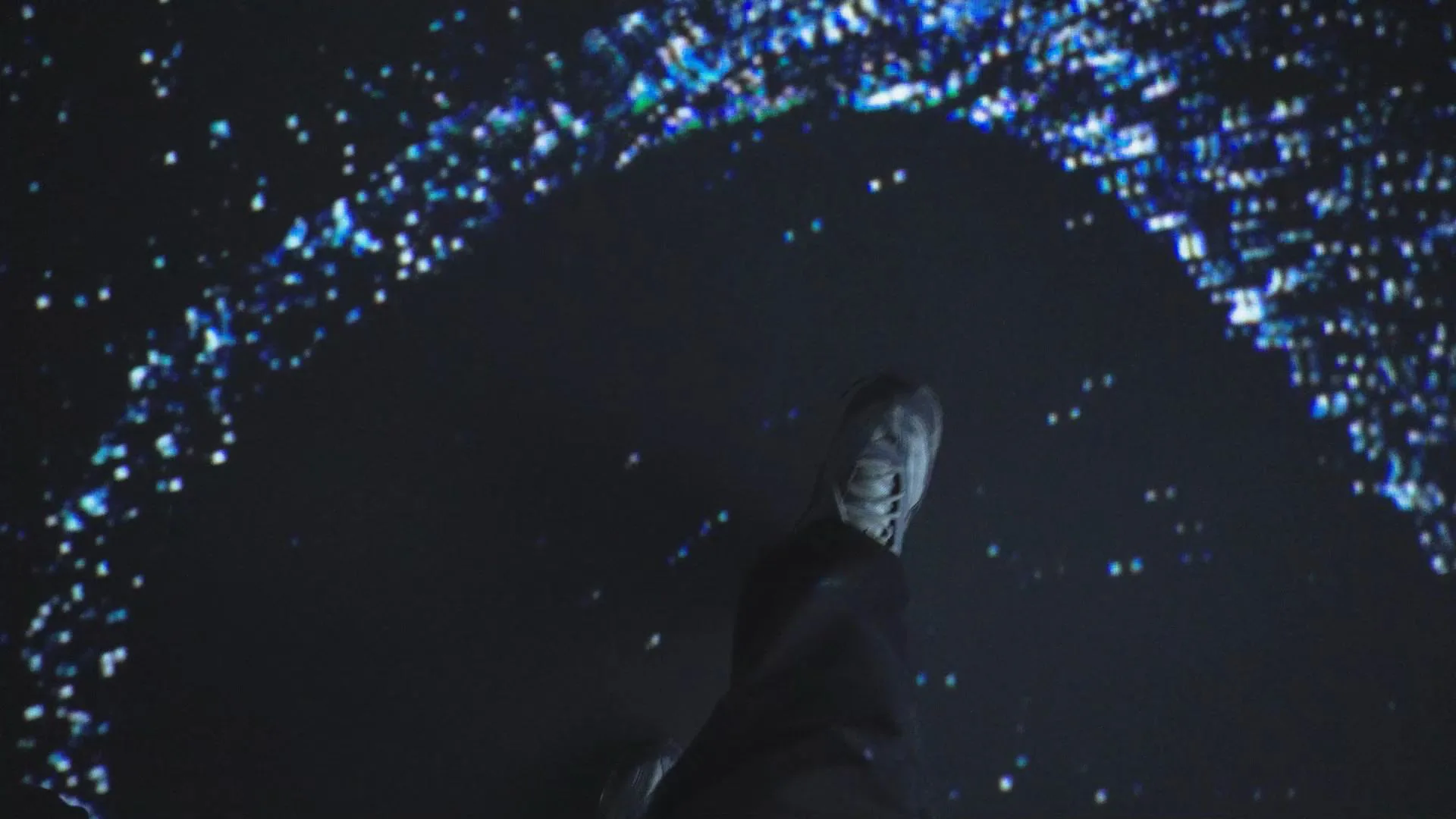
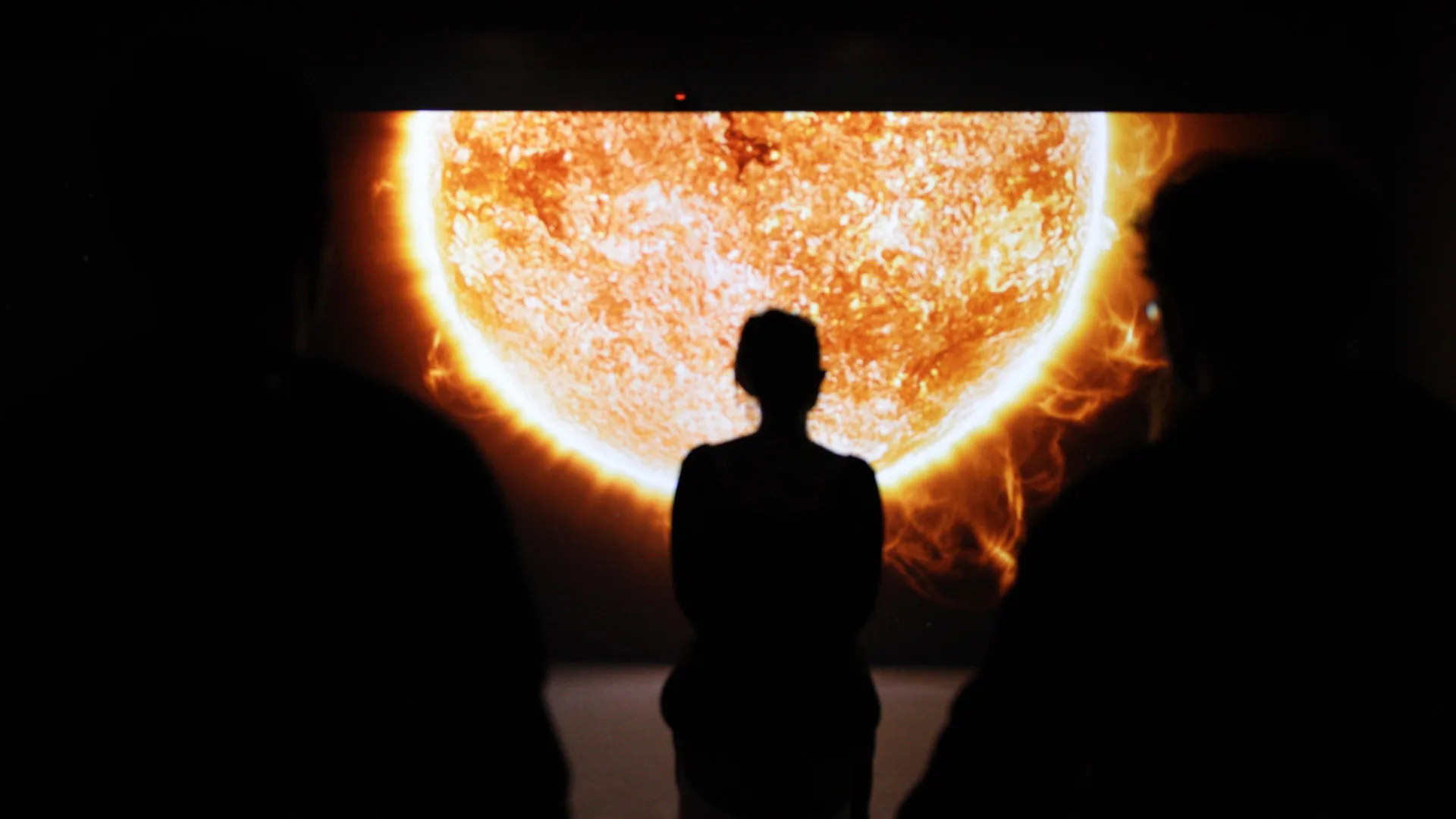
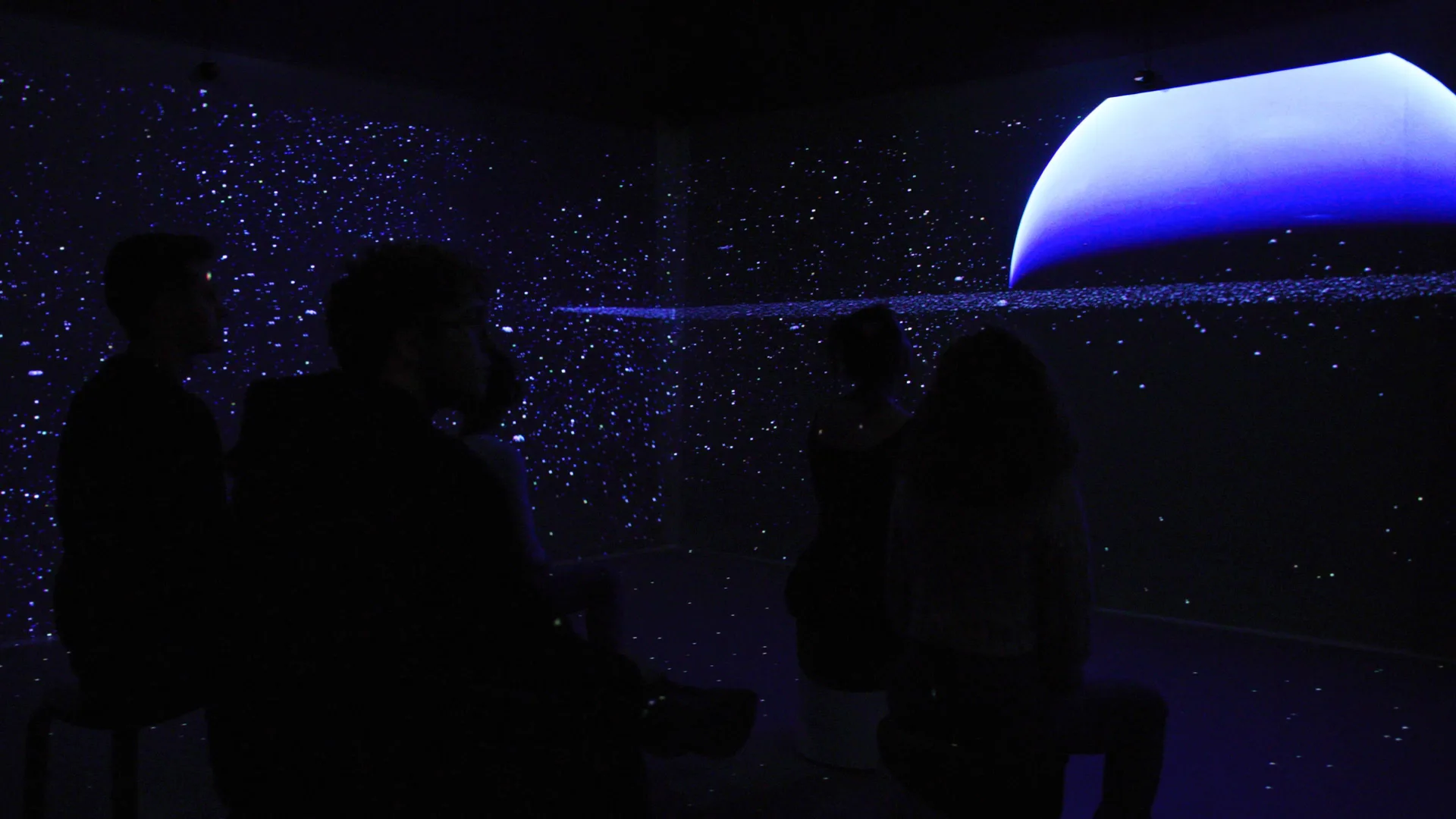
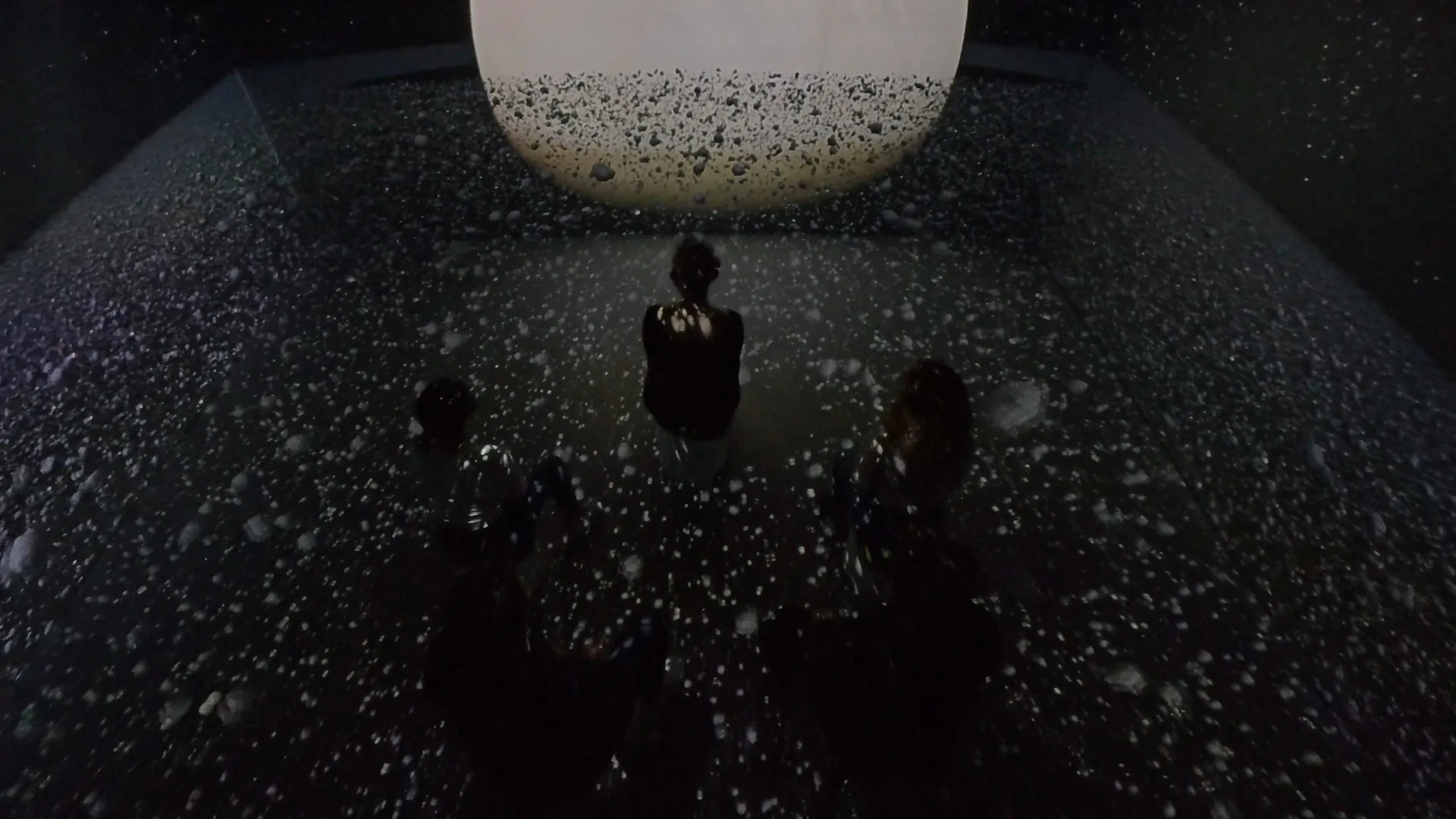
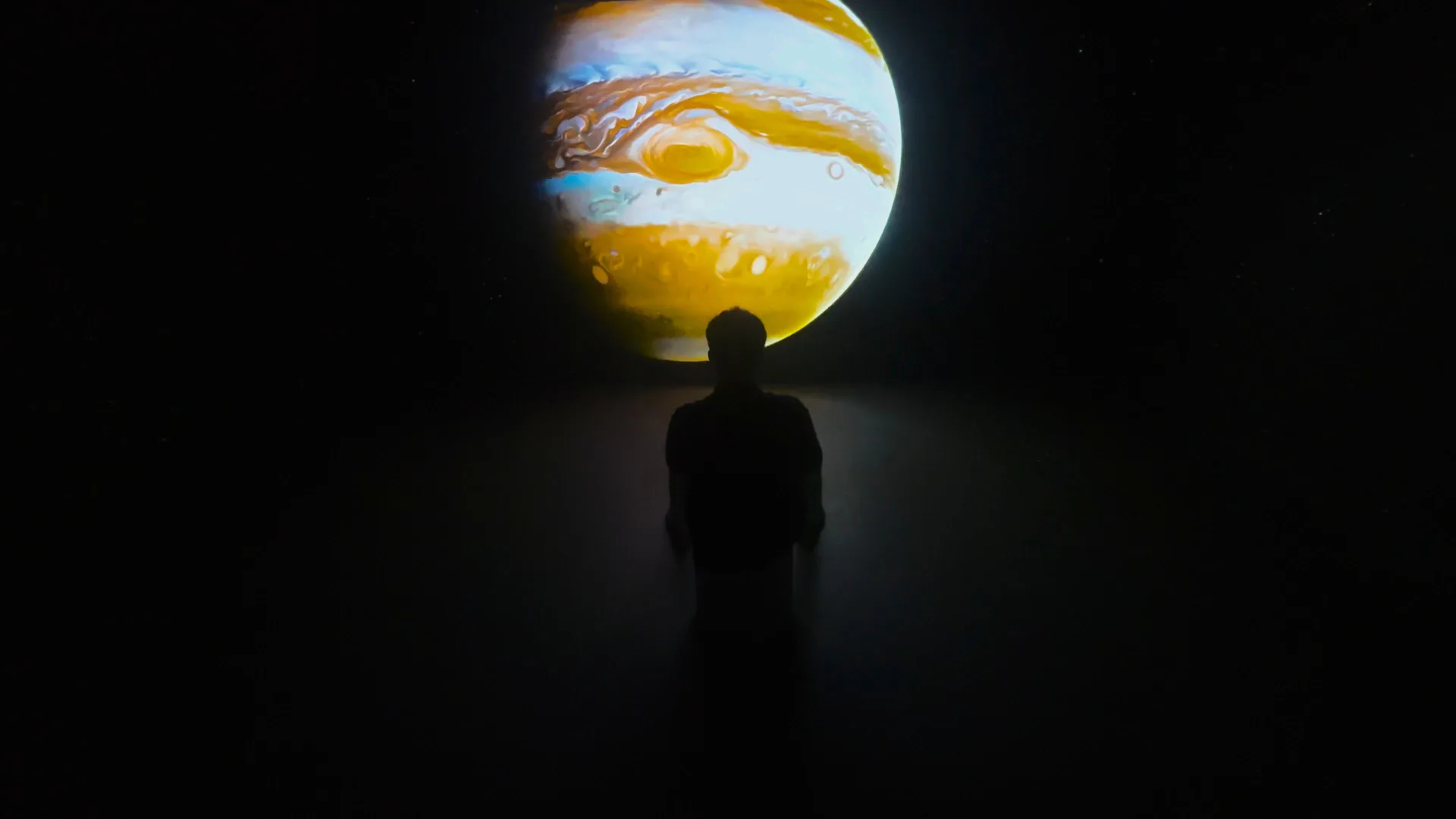
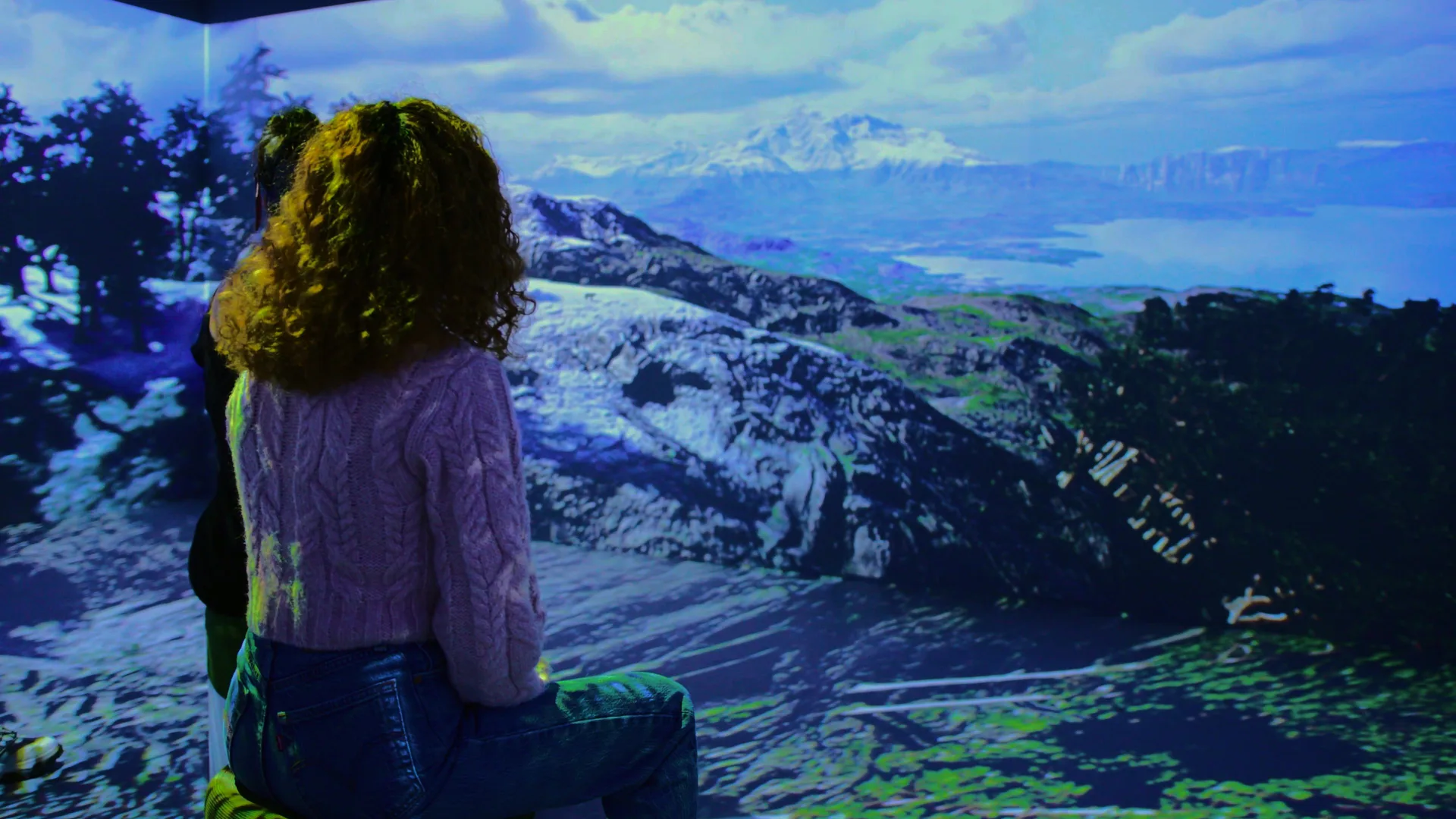
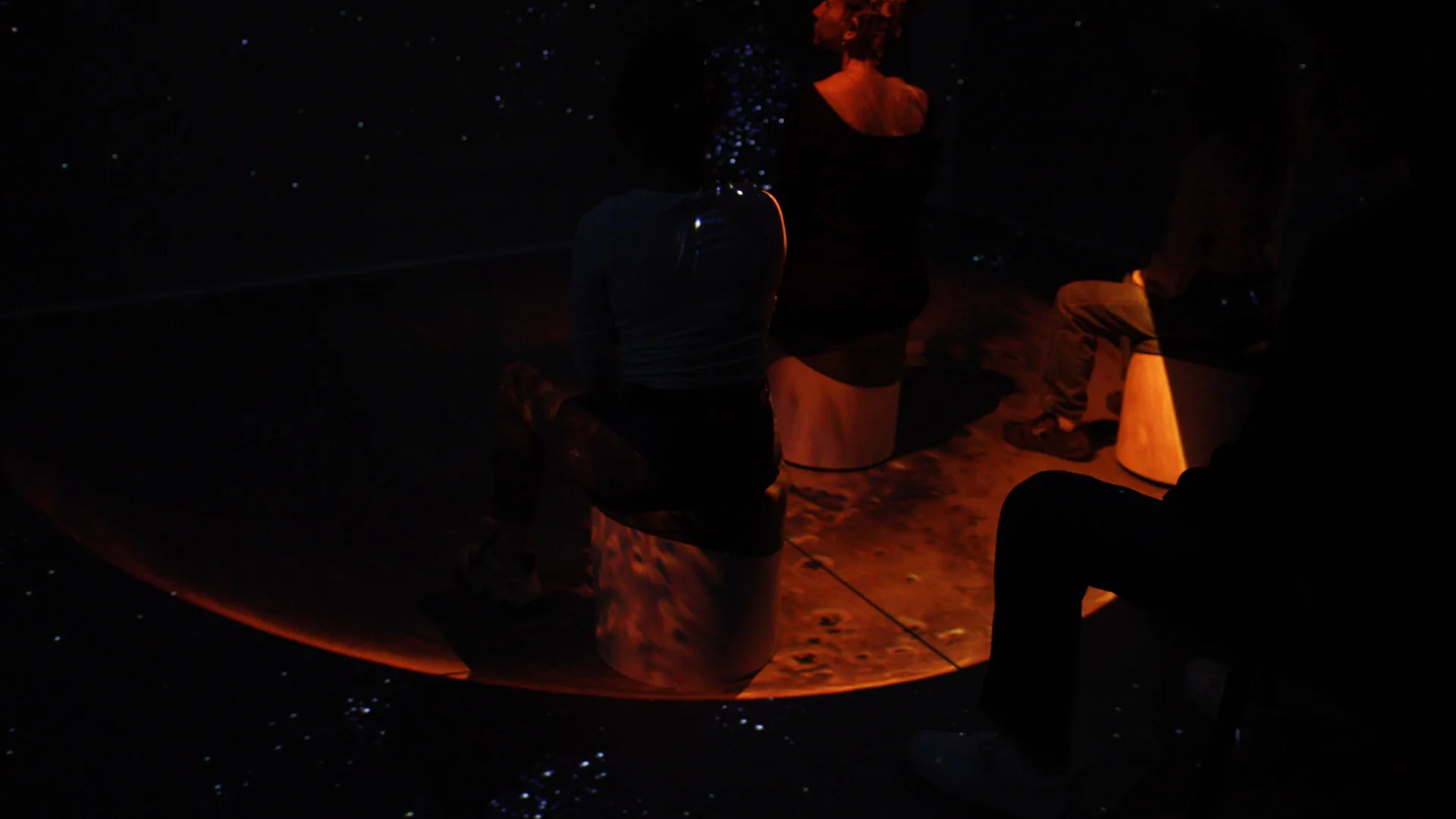
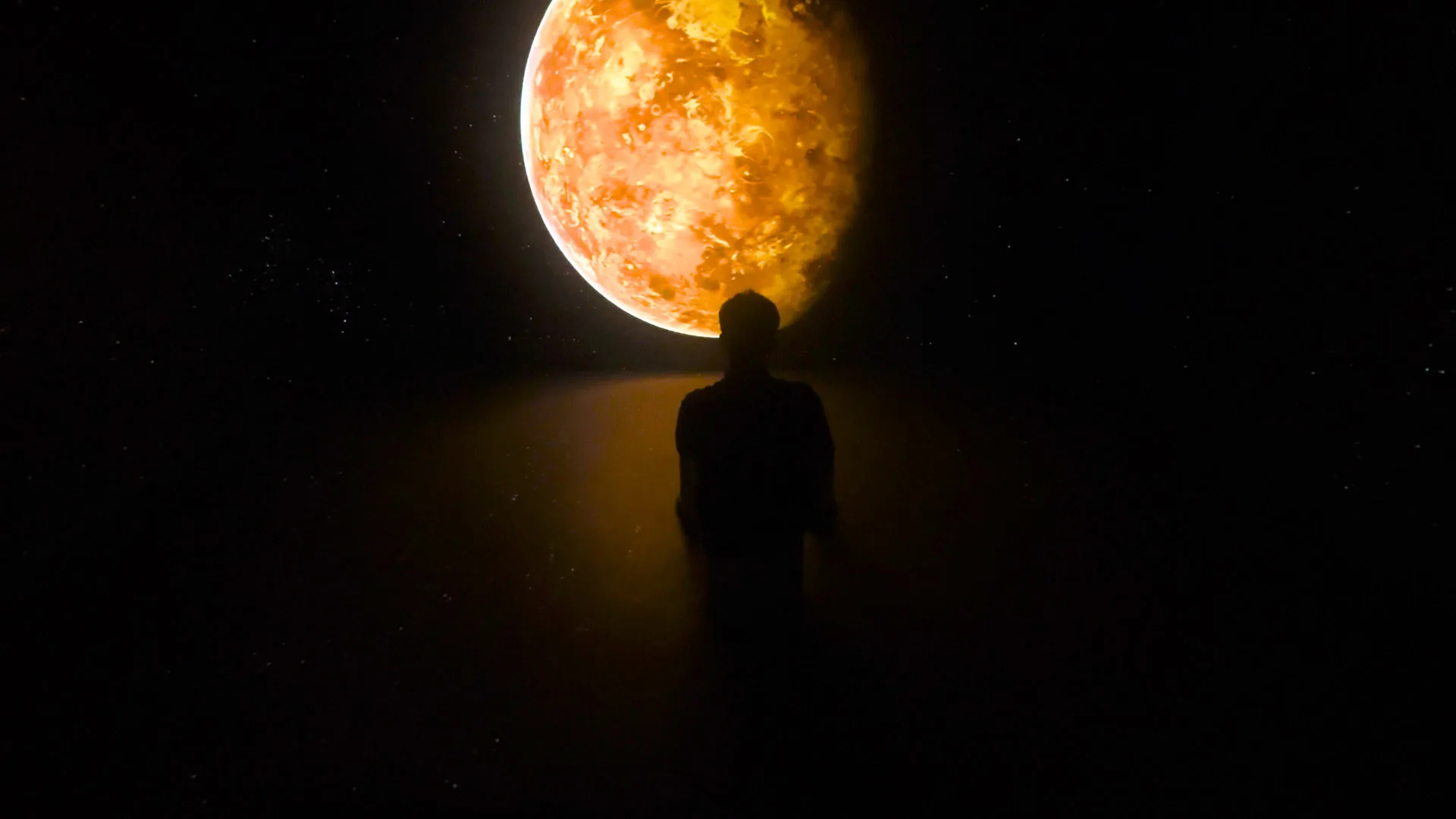
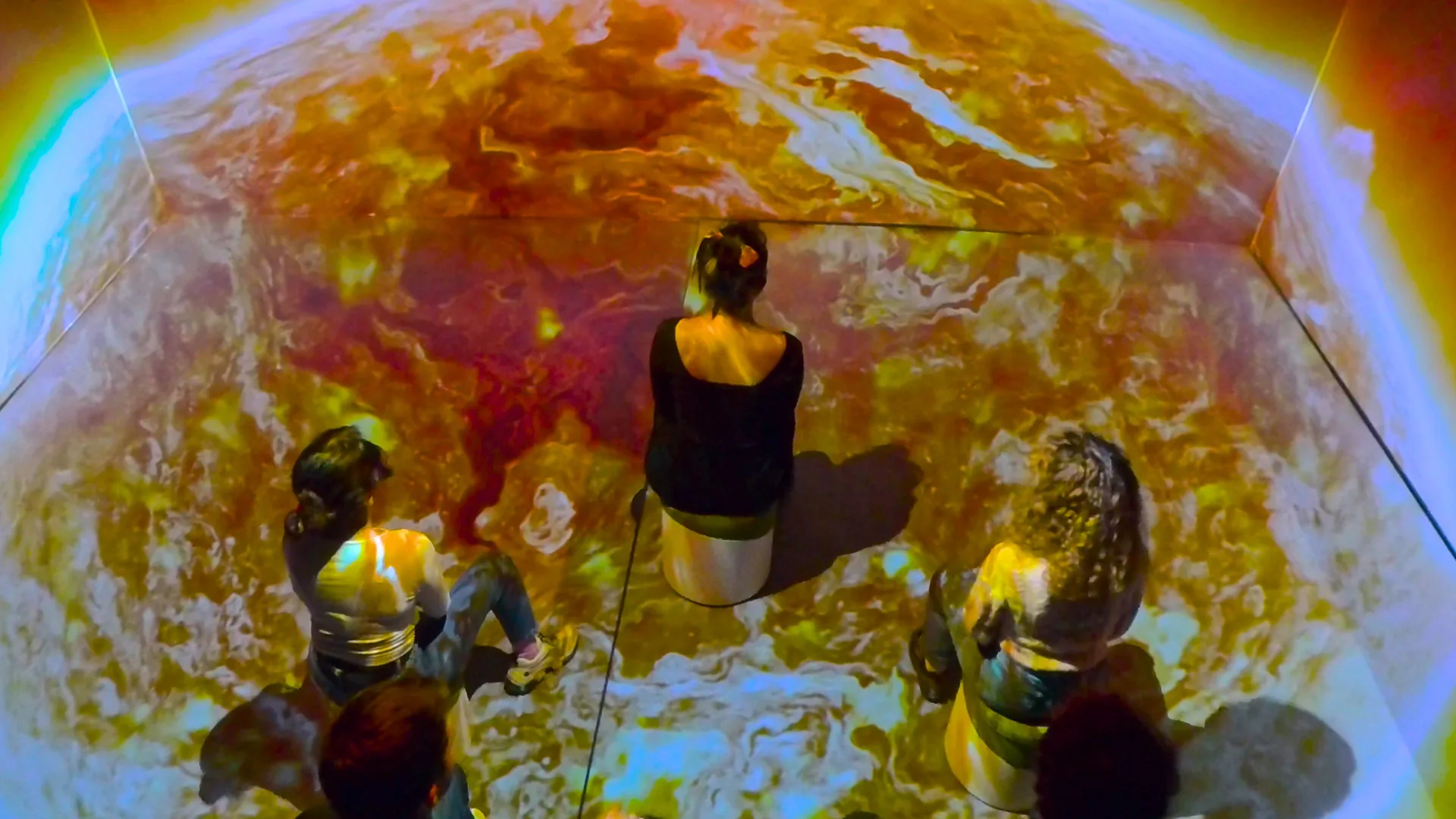
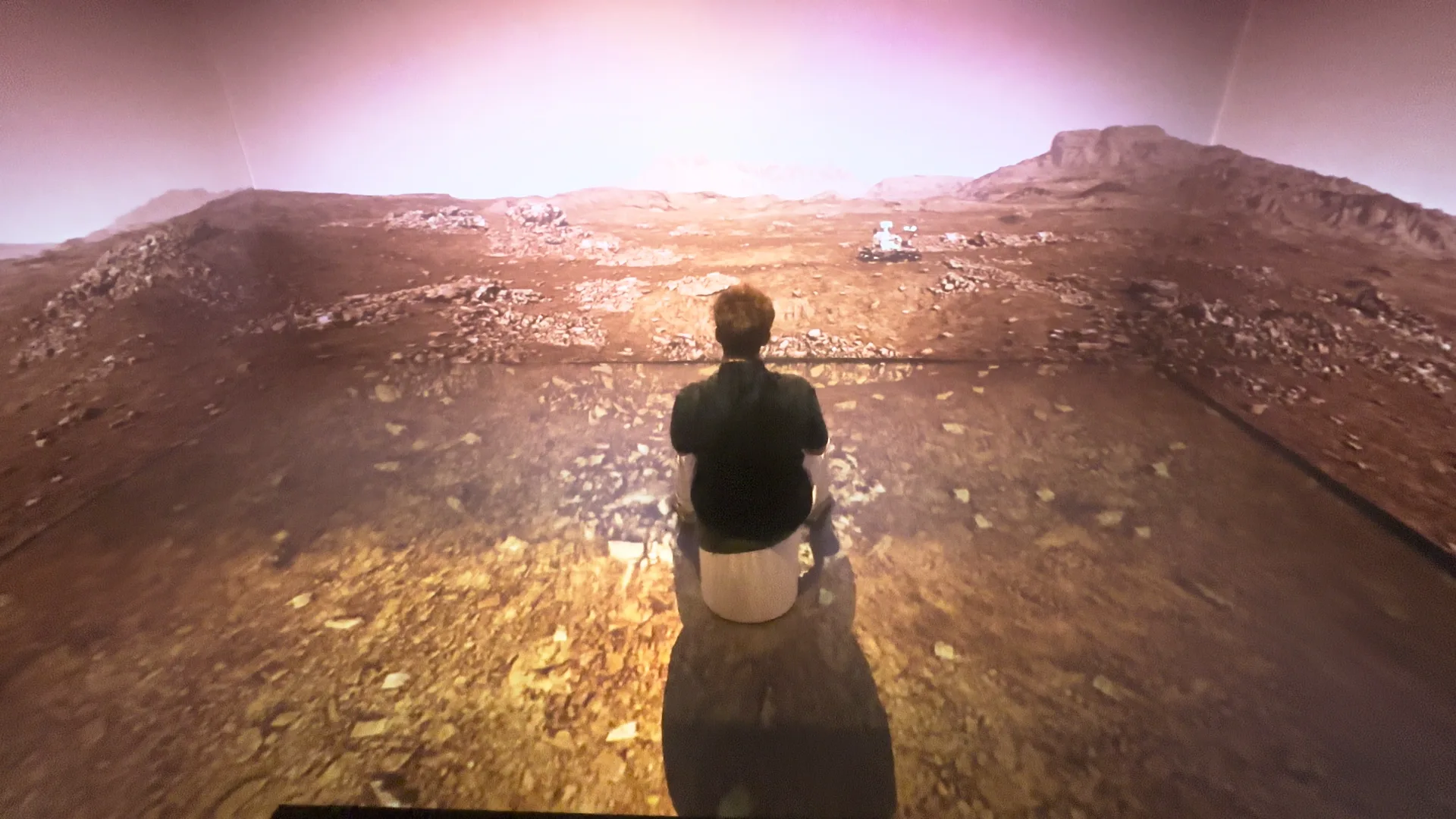
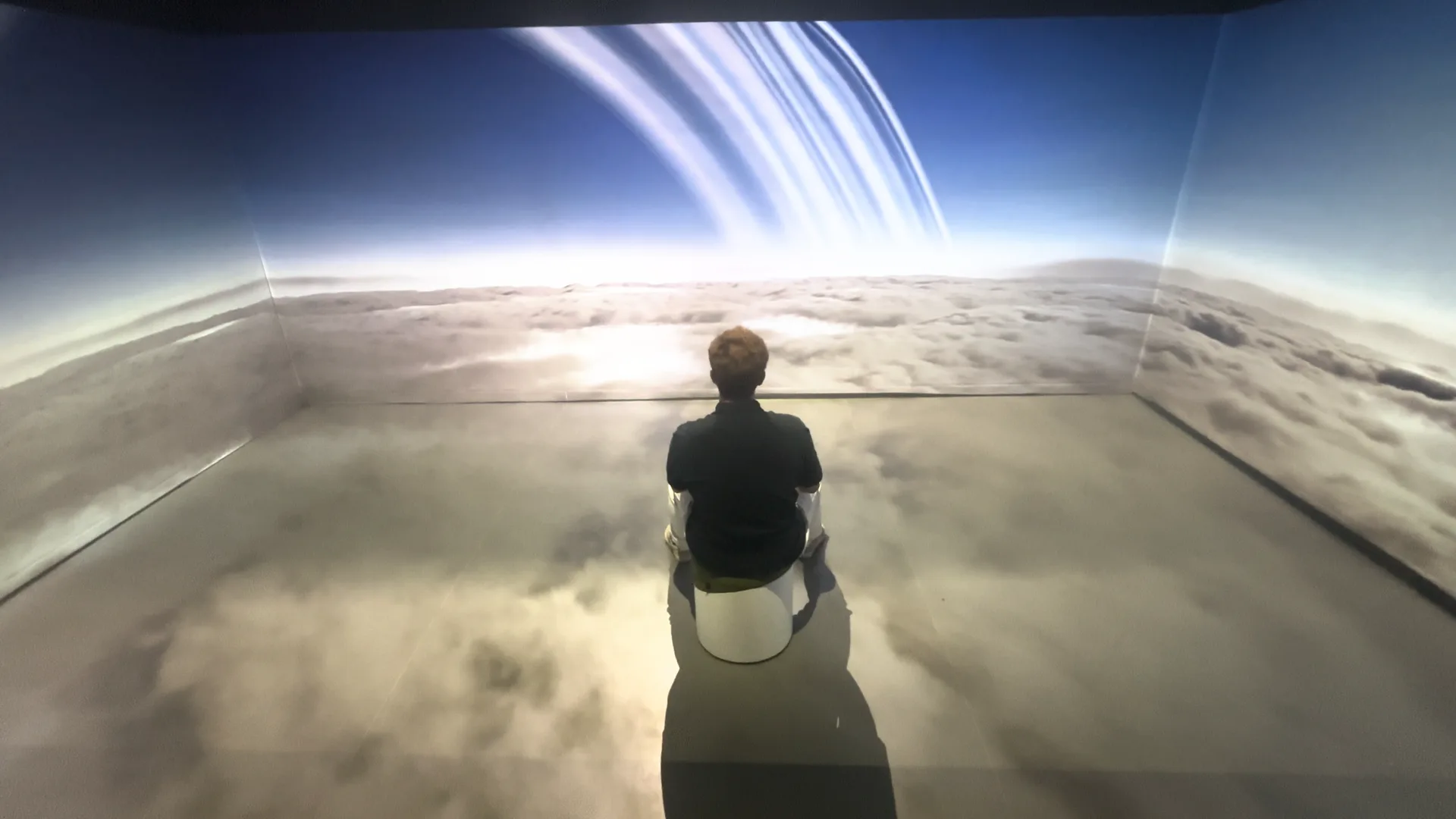
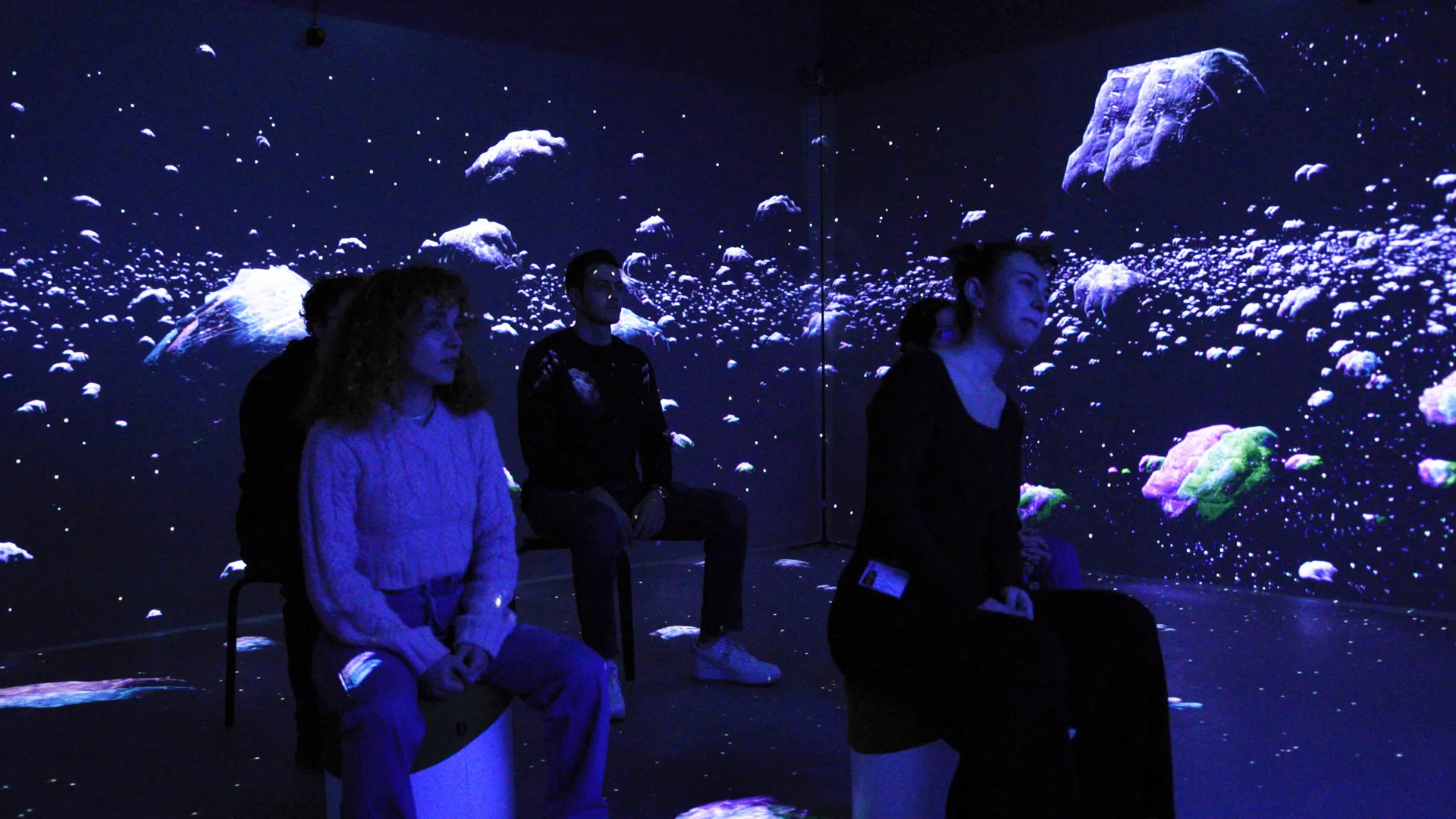
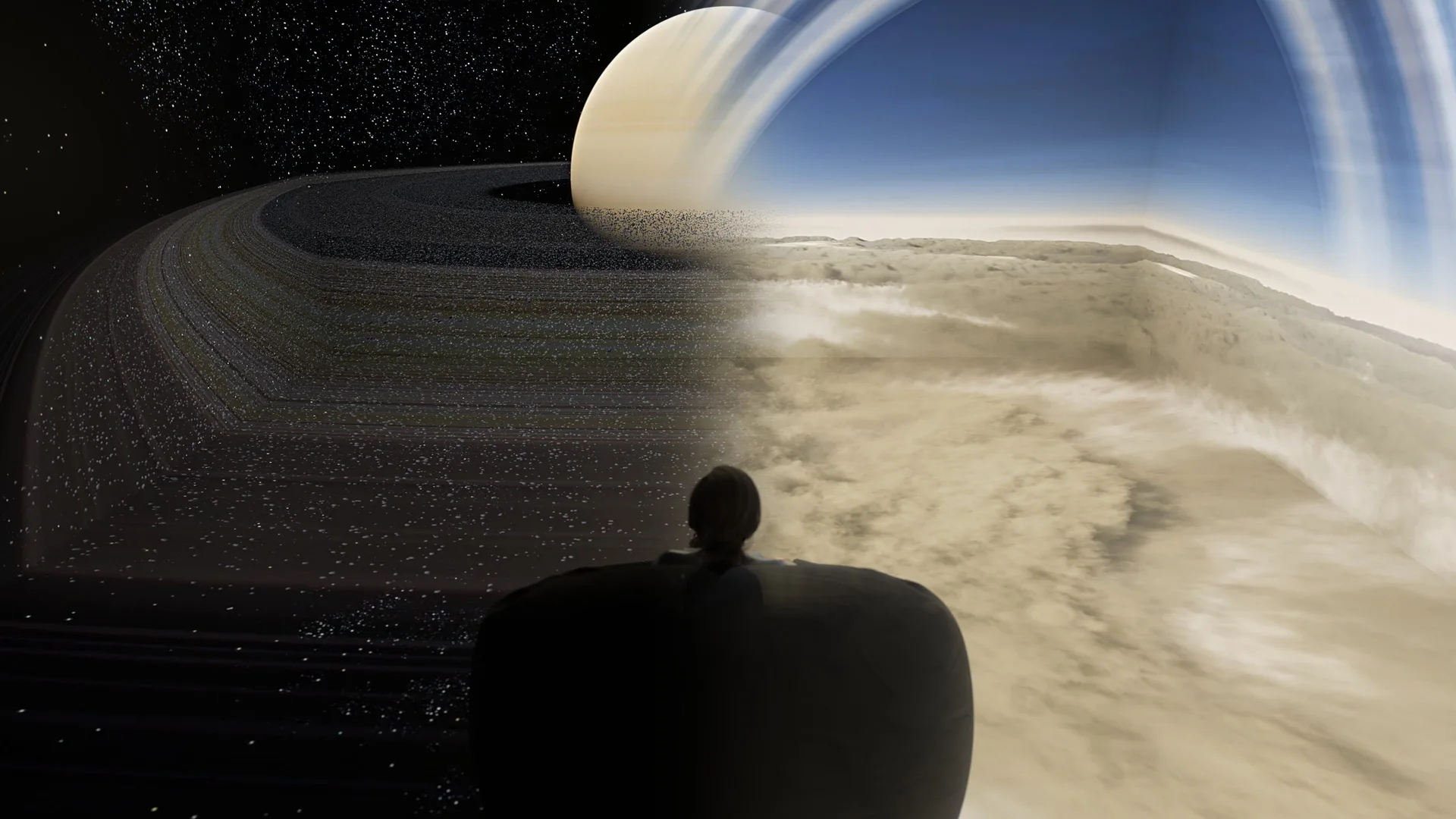
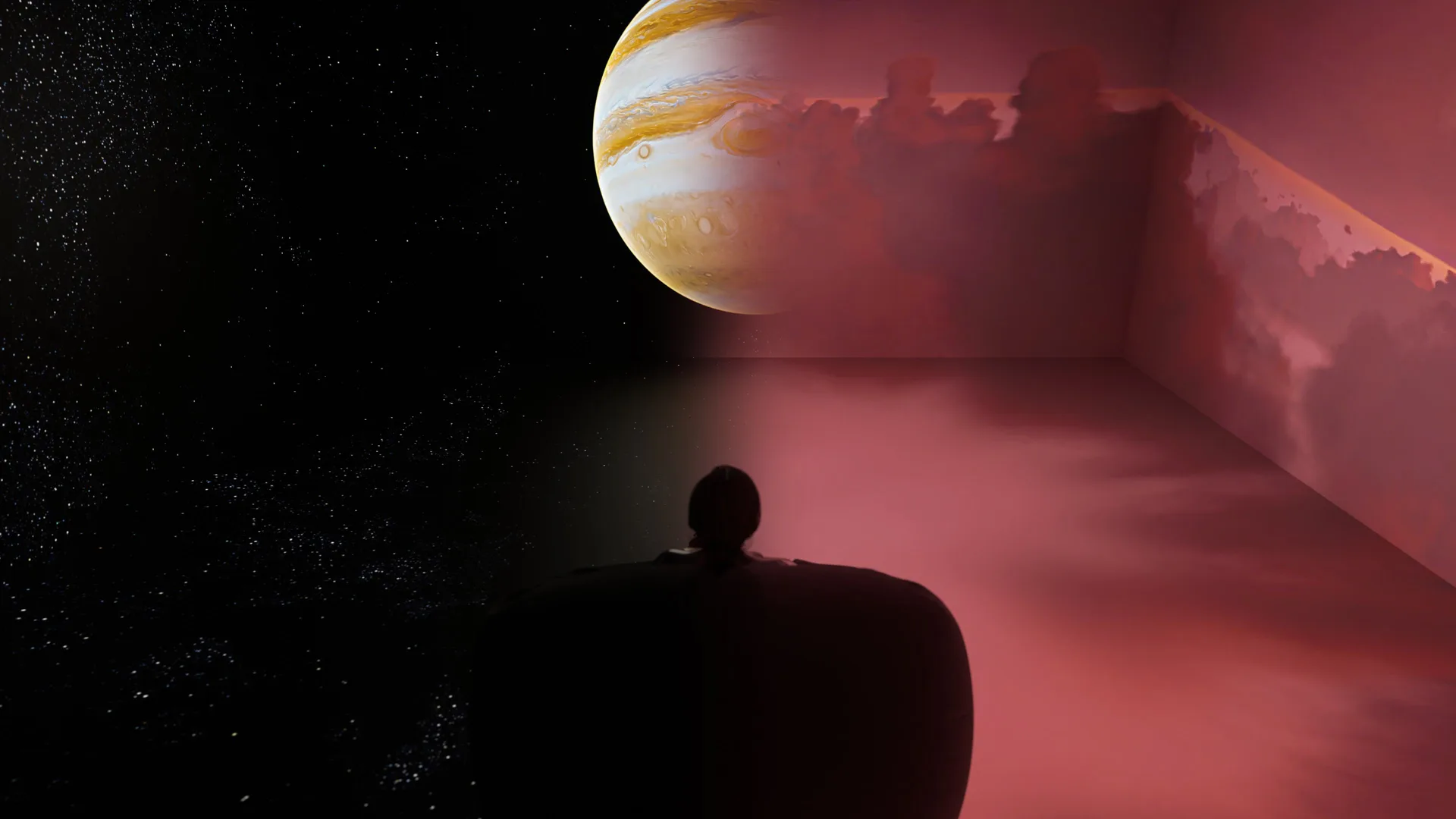
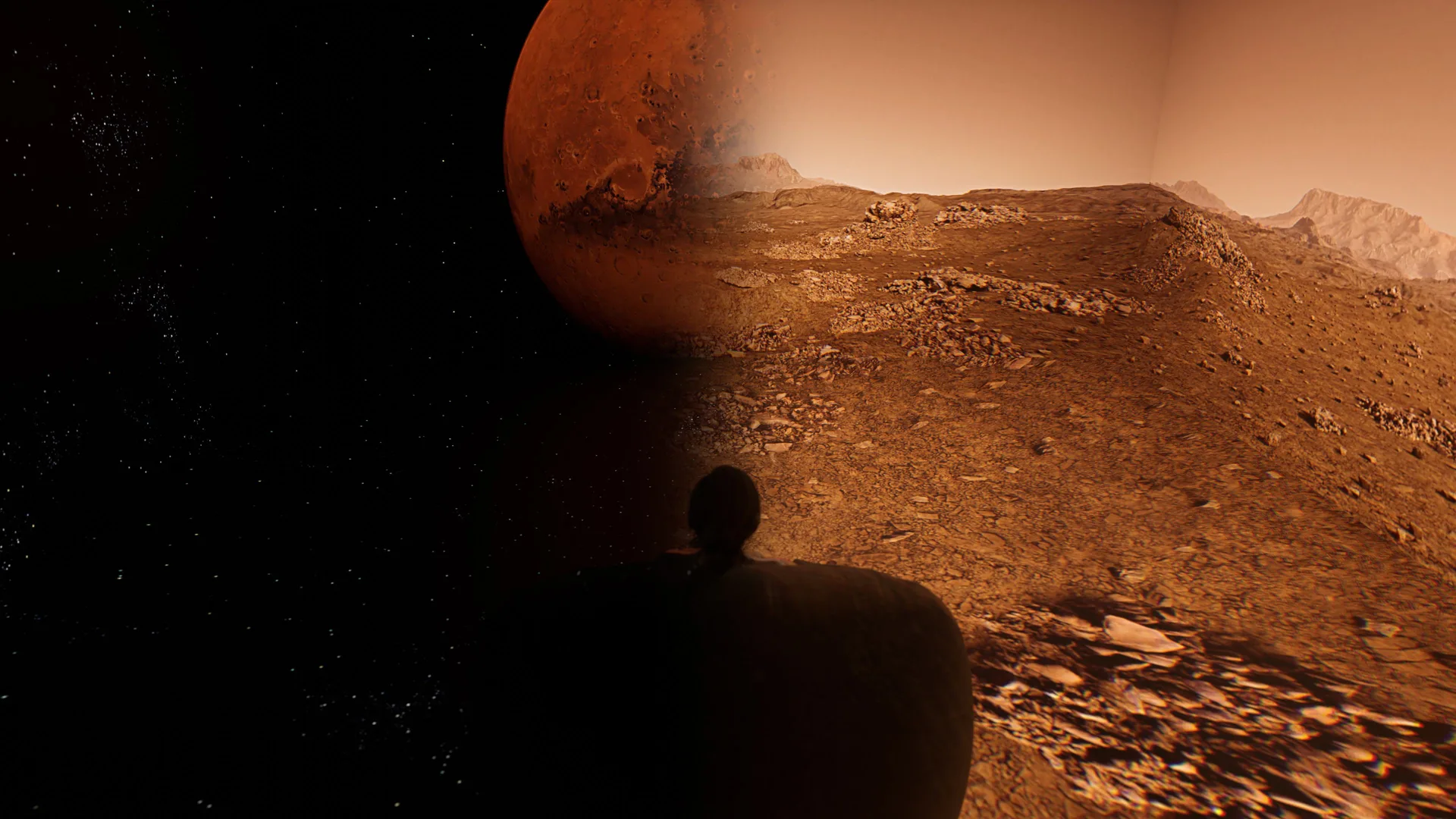
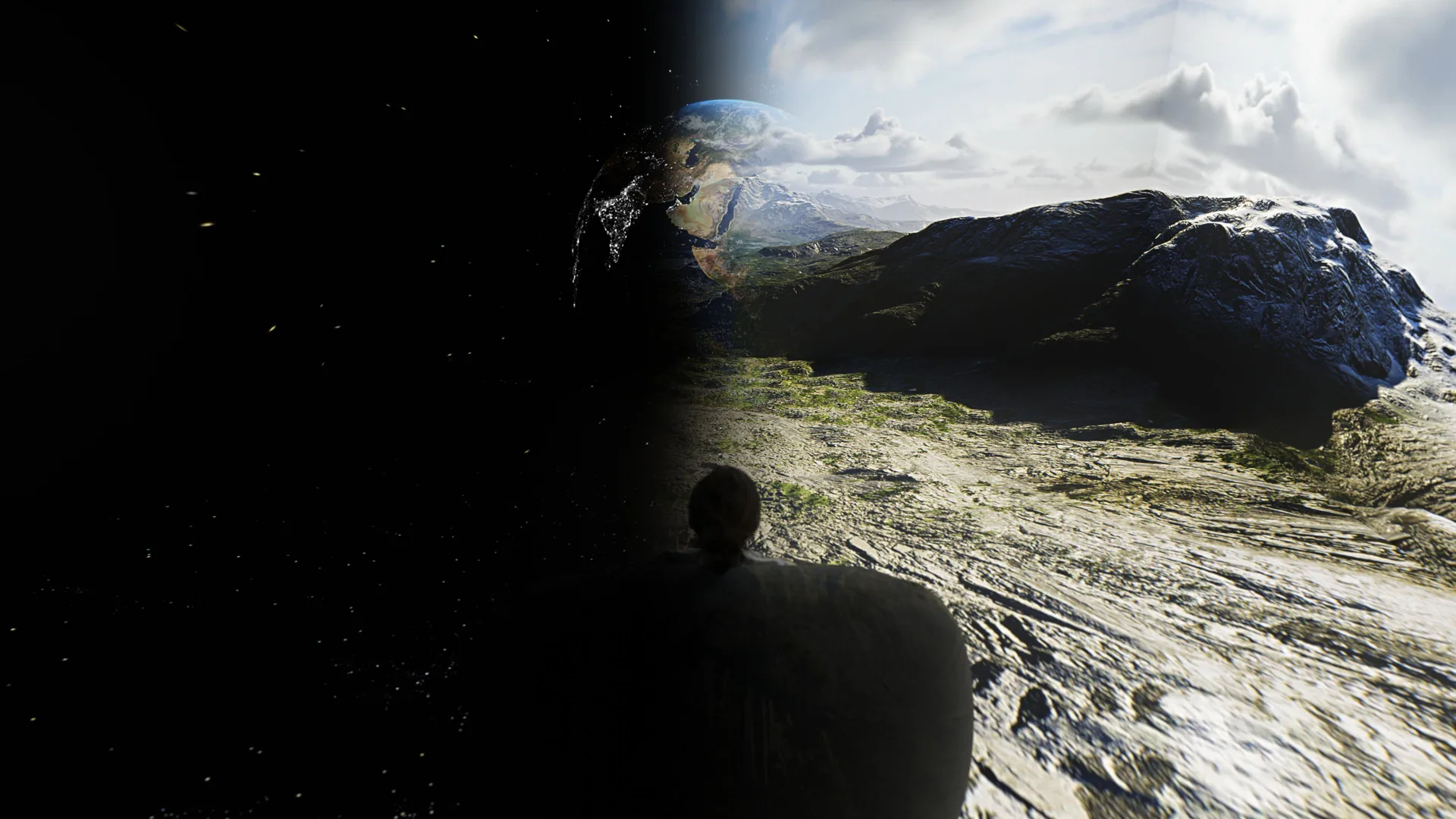
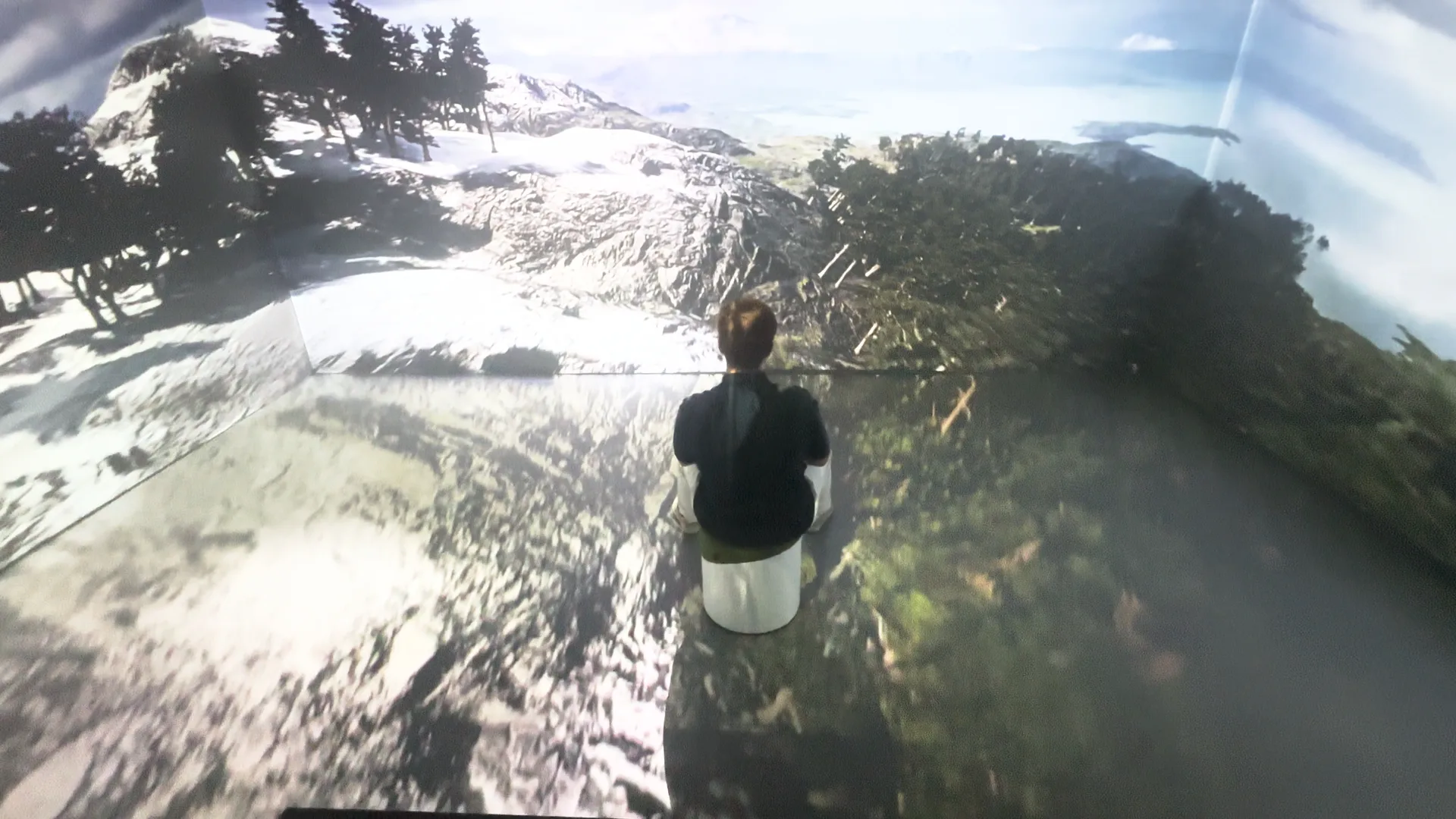
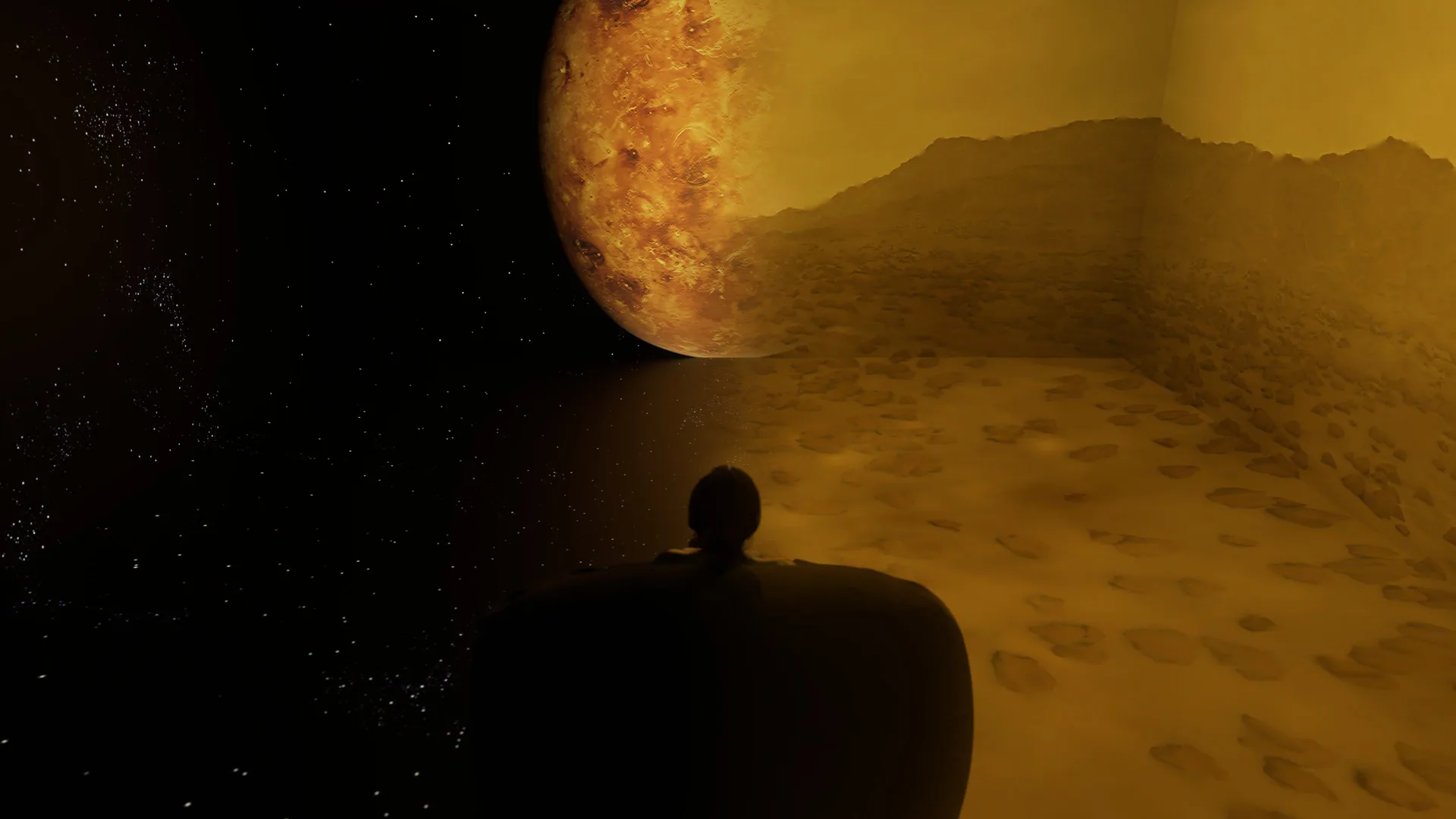
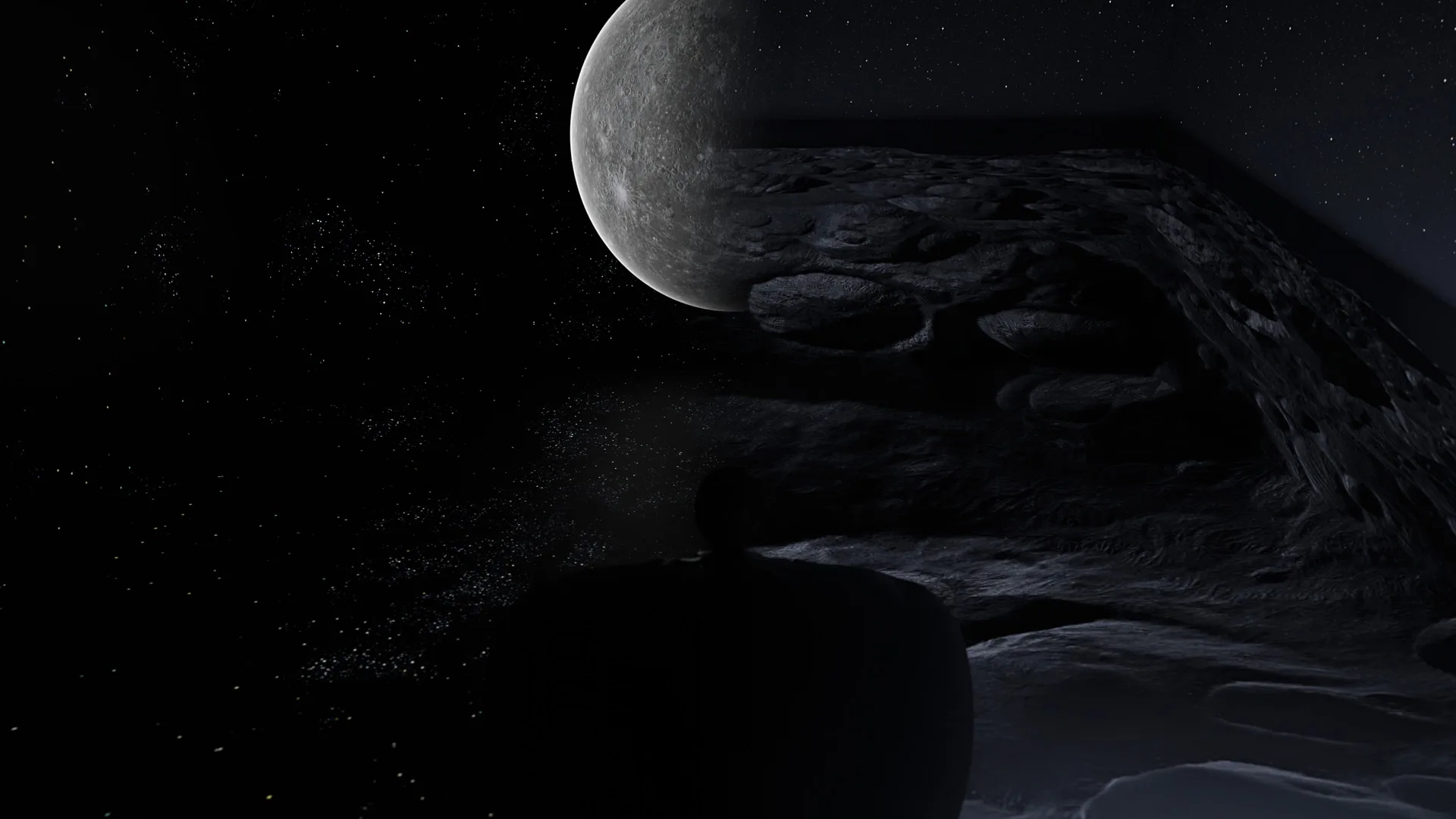
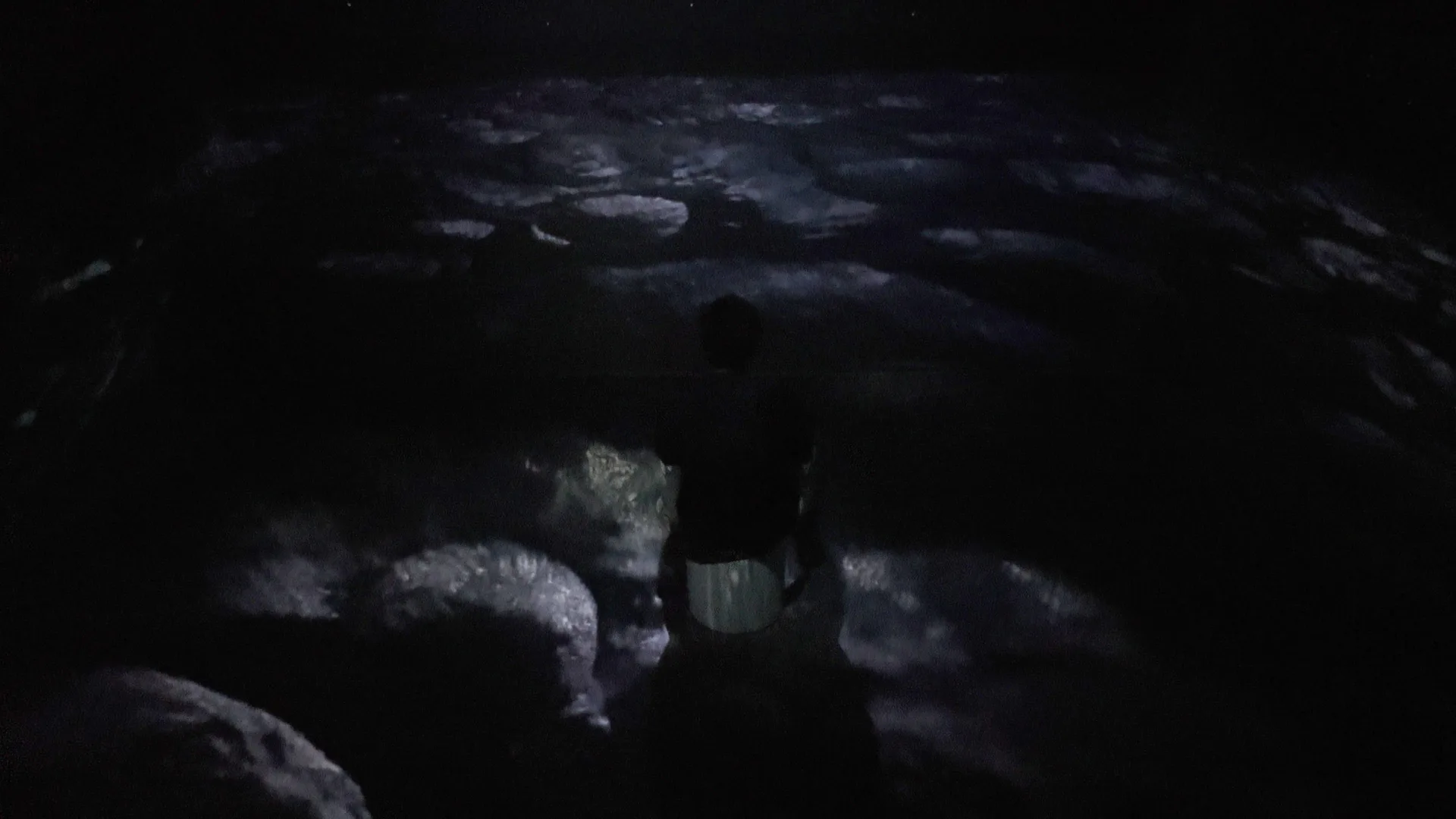
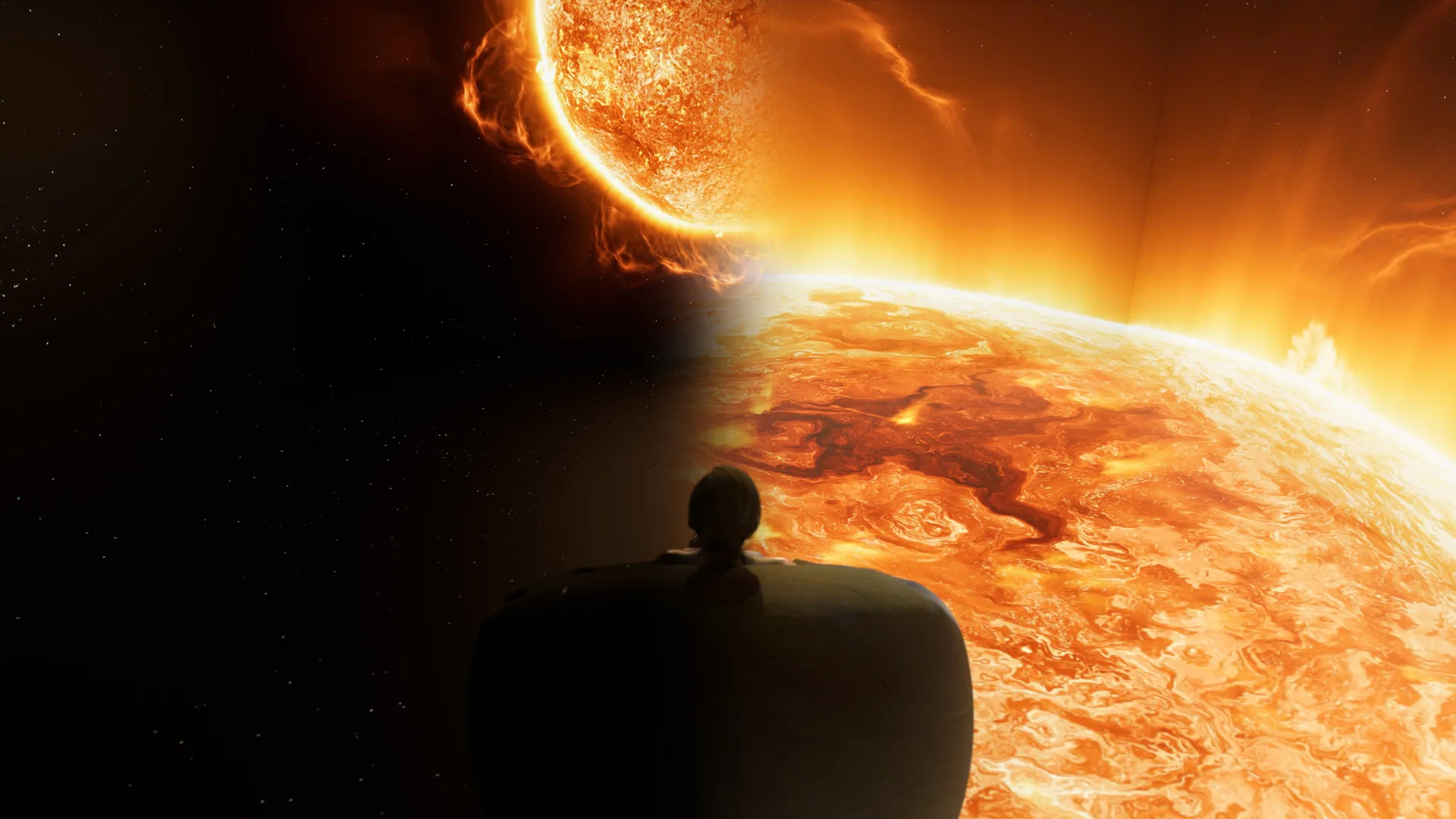
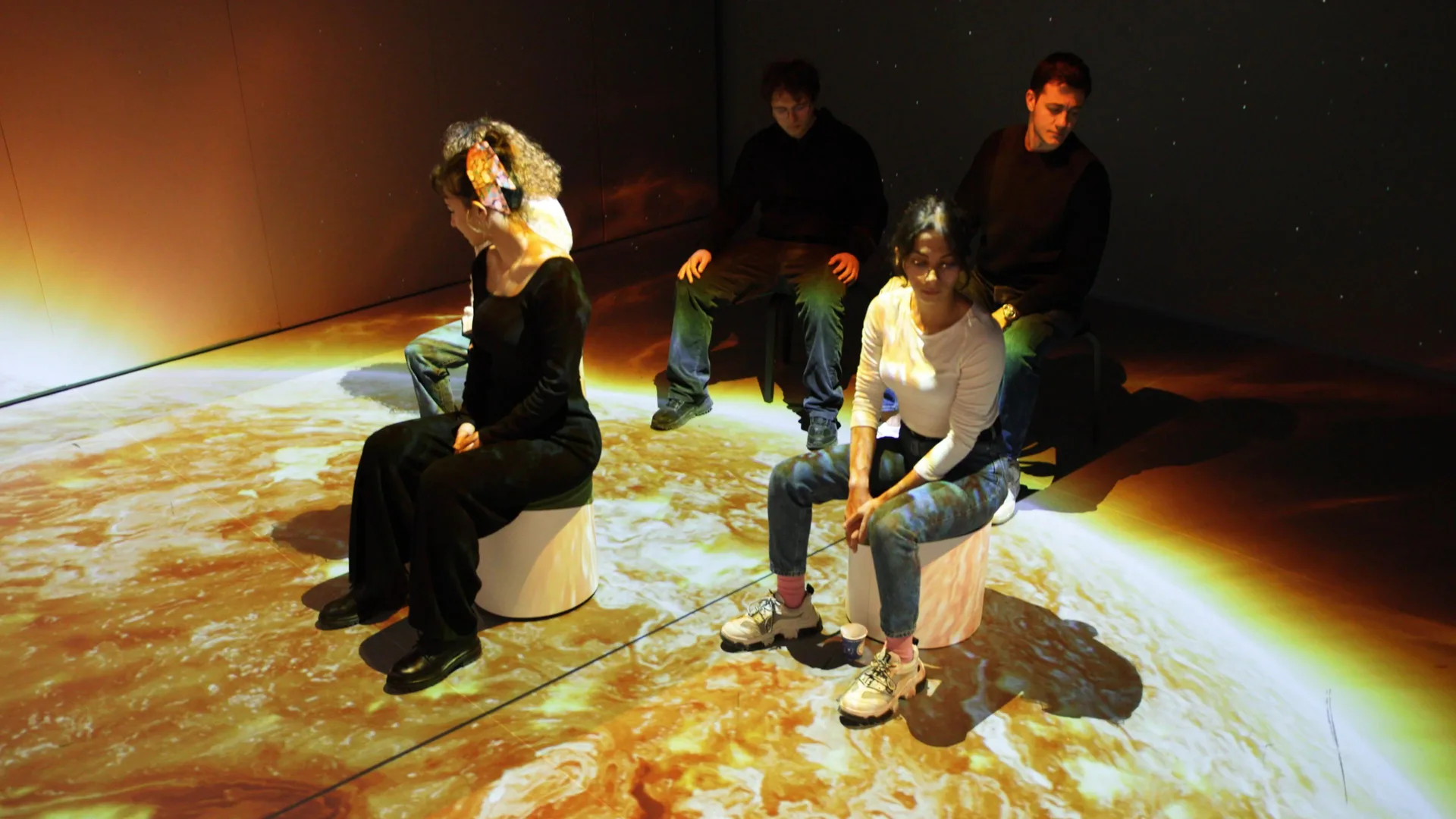
Every world arrives twice. First as a body seen from space — hanging on the far wall in the dark, the room reduced to a planetarium. Then the surface takes over: the ground runs out from under the visitors' seats, up the walls, and the horizon settles where a seated eye line puts it.
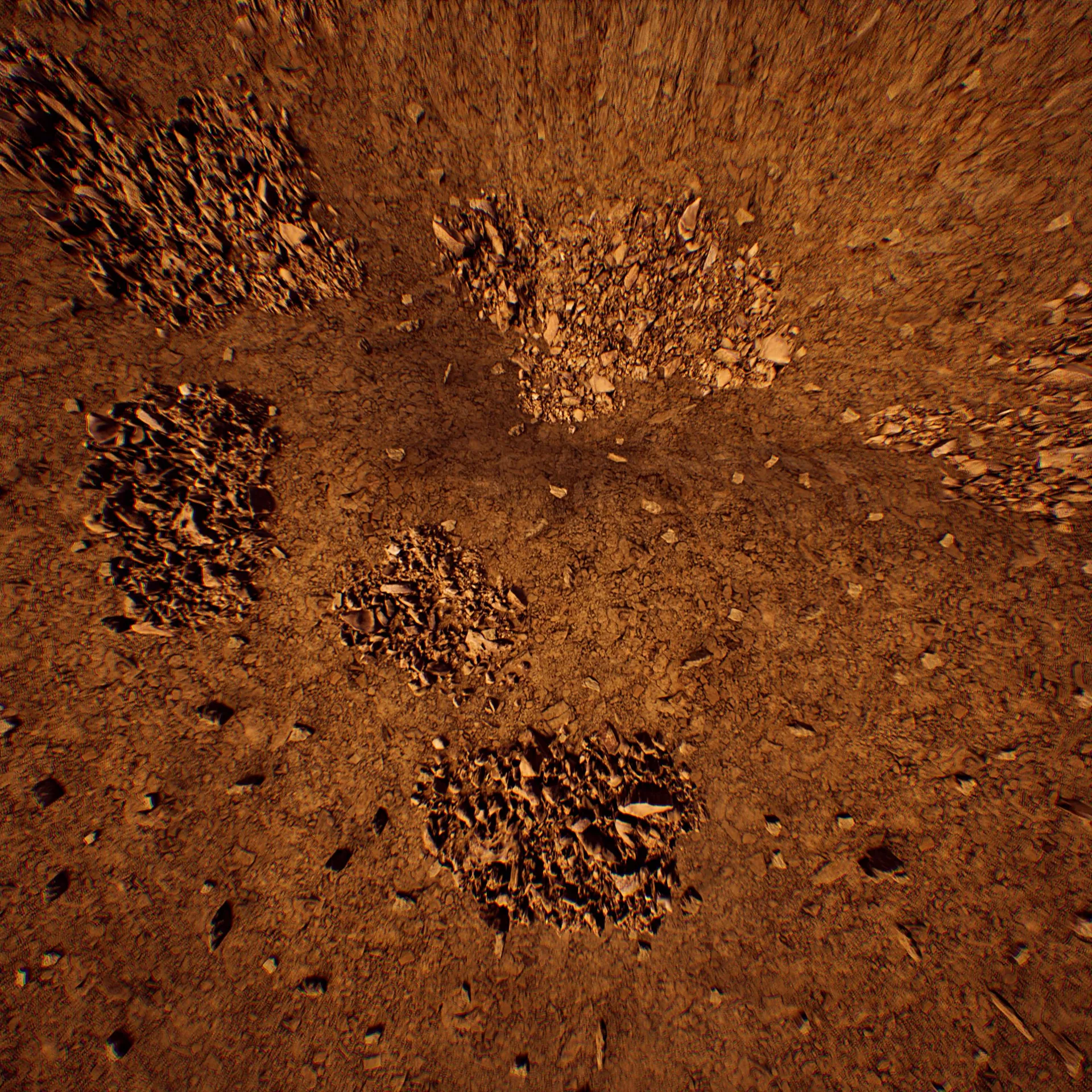
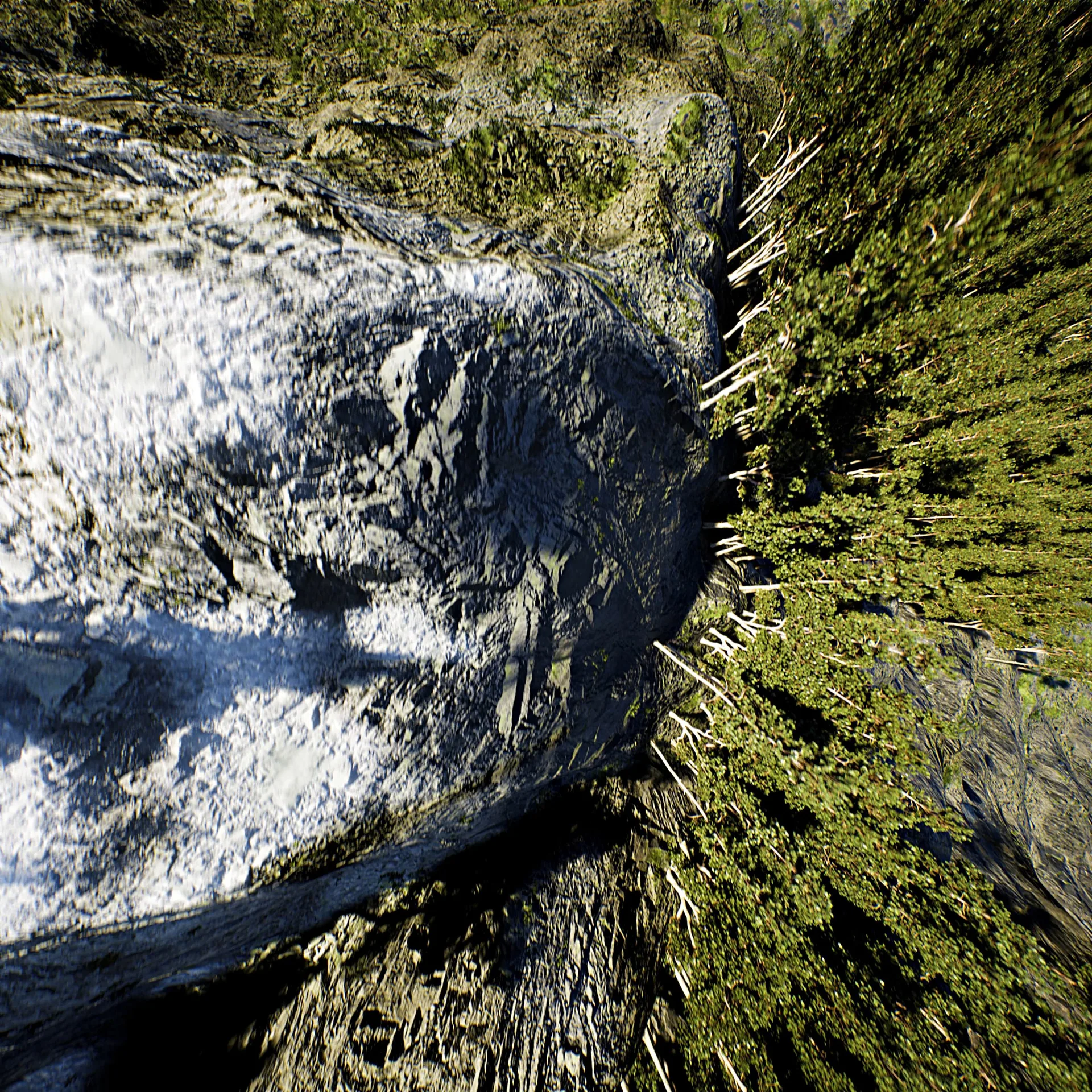
Floor and walls are rendered from one continuous environment so a rock at the base of the wall carries on across the floor without a seam. The seats are the only fixed thing in the room; everything else is light.
The journey
Neptune to the Sun
The sequence runs inward from the edge of the system, so the room gets warmer and brighter as it goes — from ice fragments in the dark to a wall of plasma. Each world is introduced with a short narration, and its surface was built to be stood in, not looked at. Each world opens on its view from orbit, then its surface as the wall content itself at the installed ratio — a full turn of the room that can be dragged round without end.
01
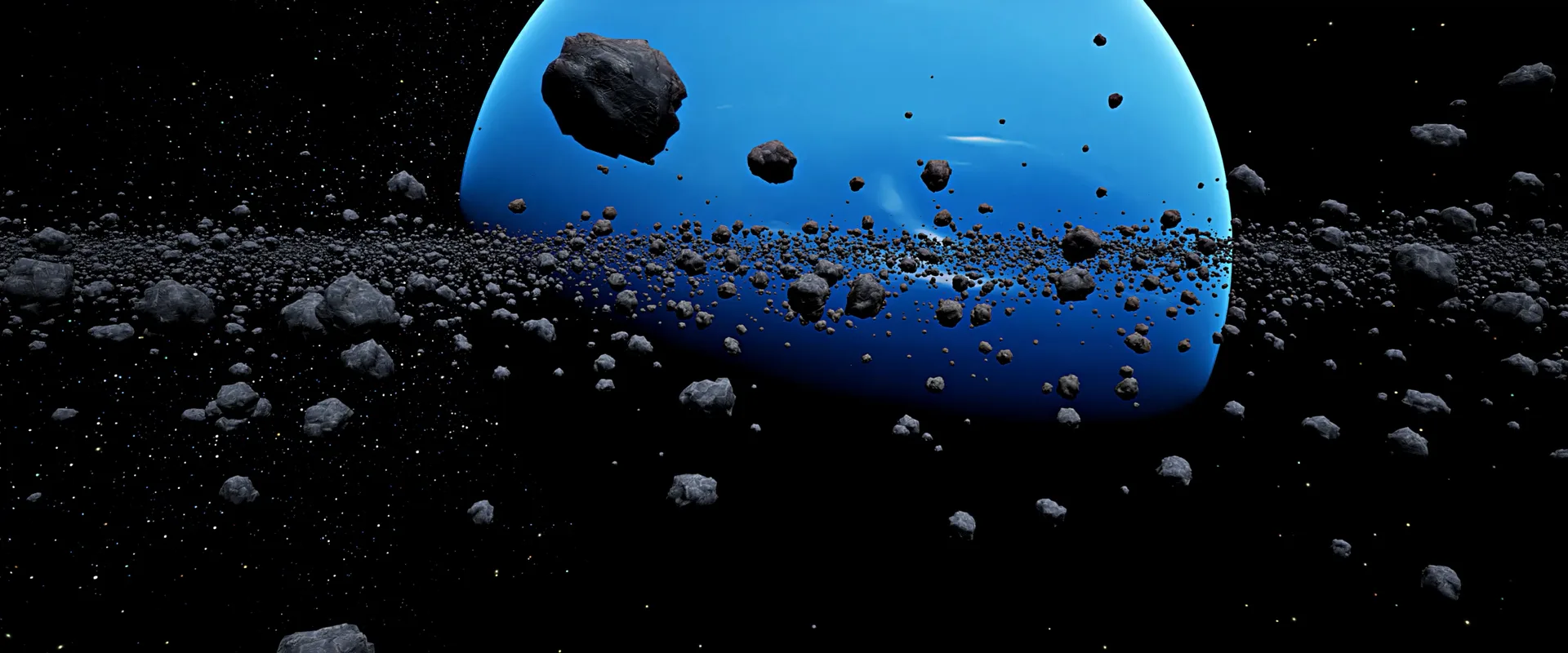
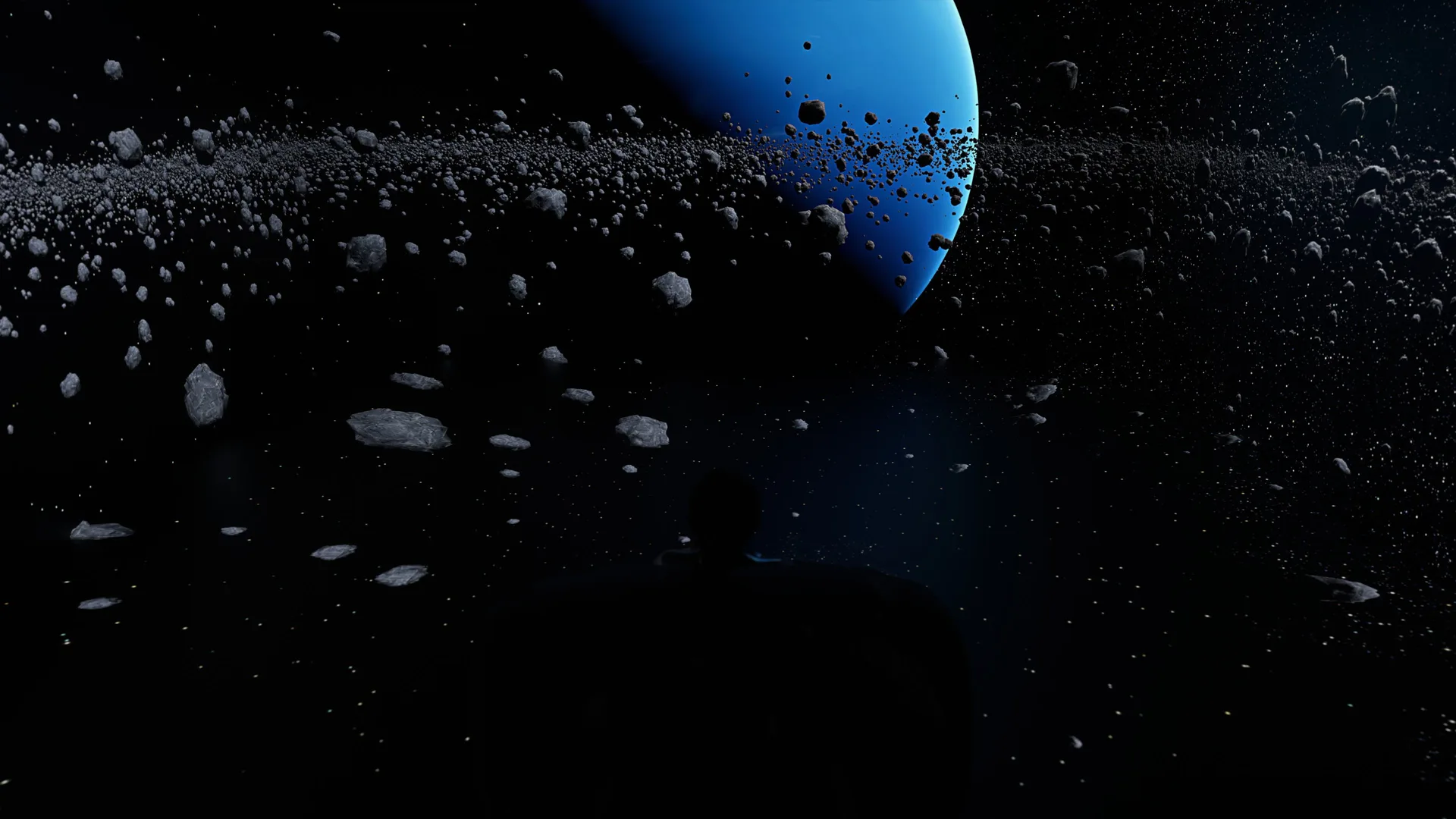
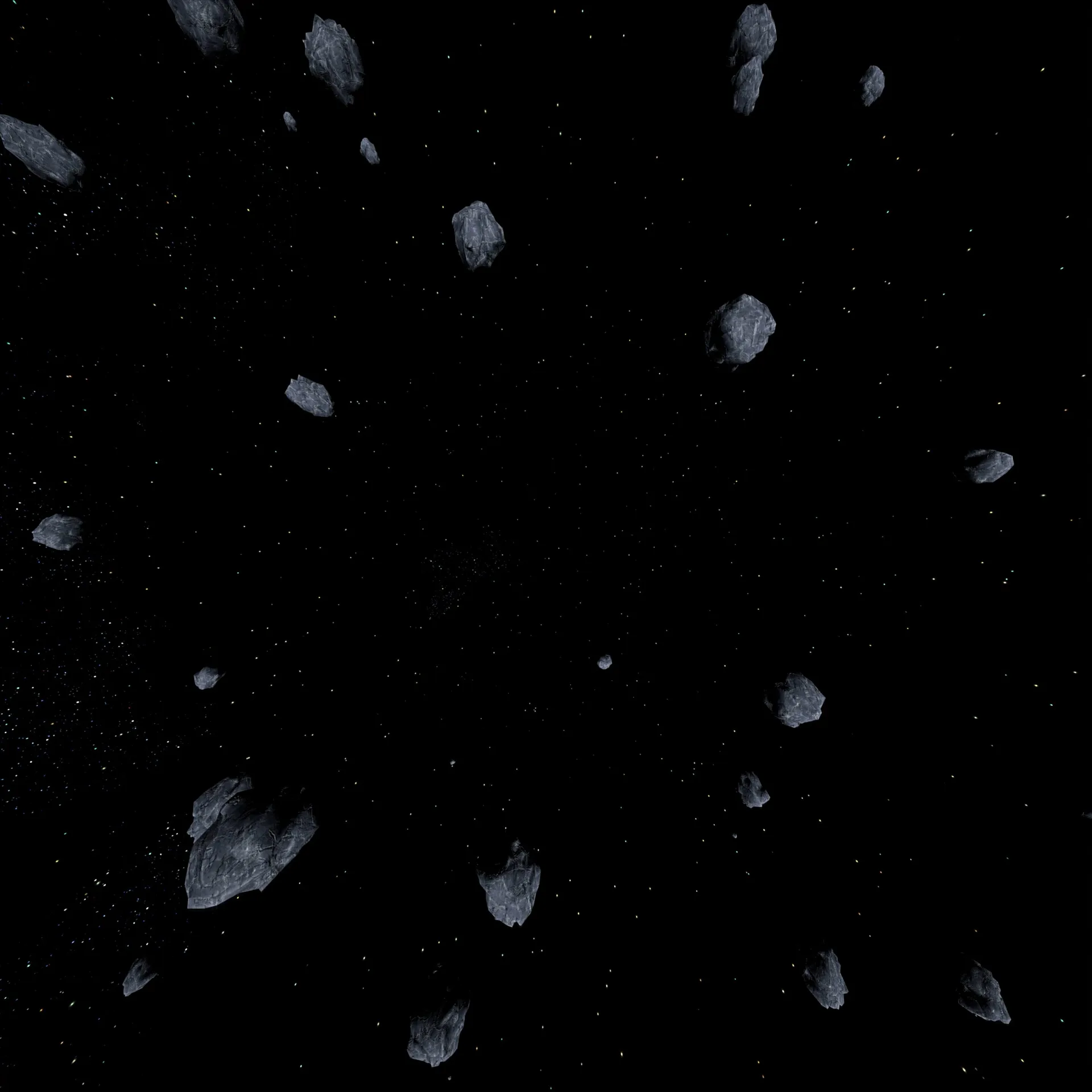
Neptune
The mysterious blue giant
At the farthest edge of the Solar System, spinning in icy darkness, lies a giant known as the desk-discovered planet — found not by the eye, but by mathematical calculation.
02
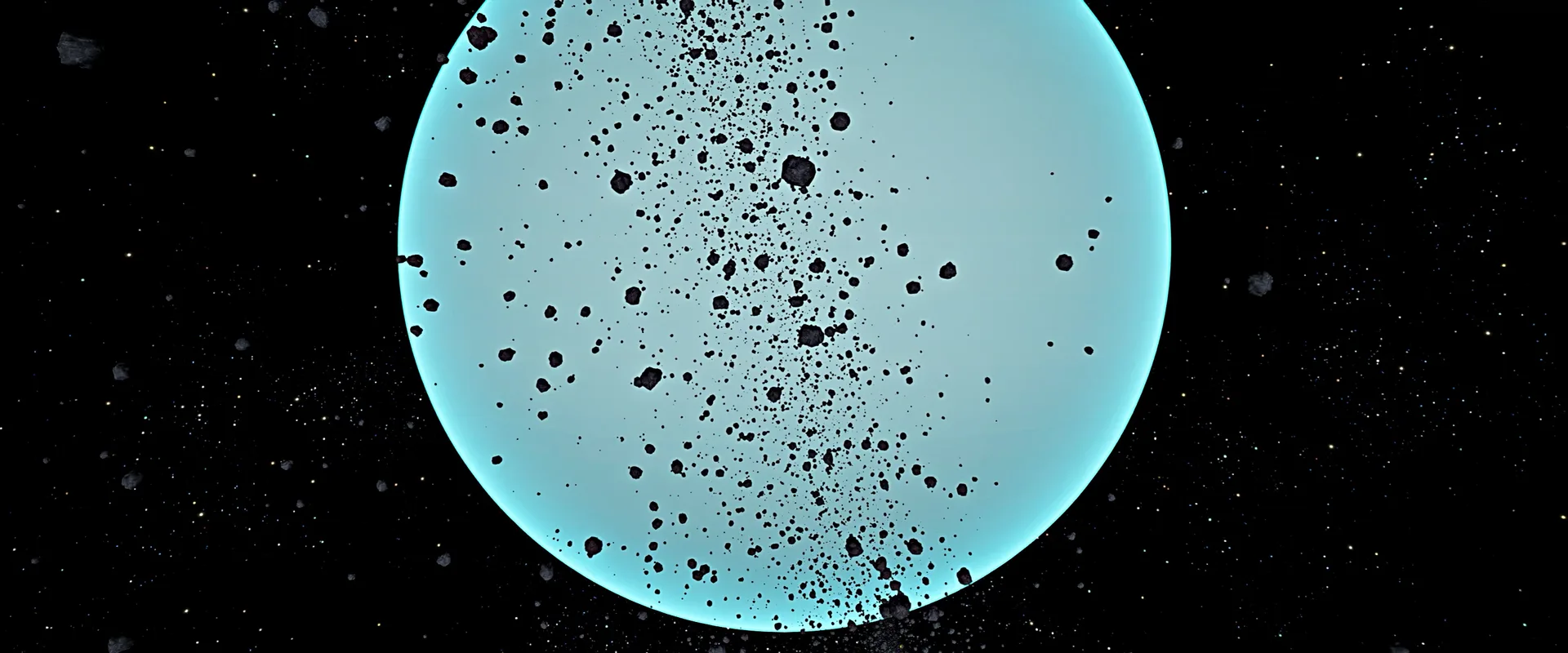
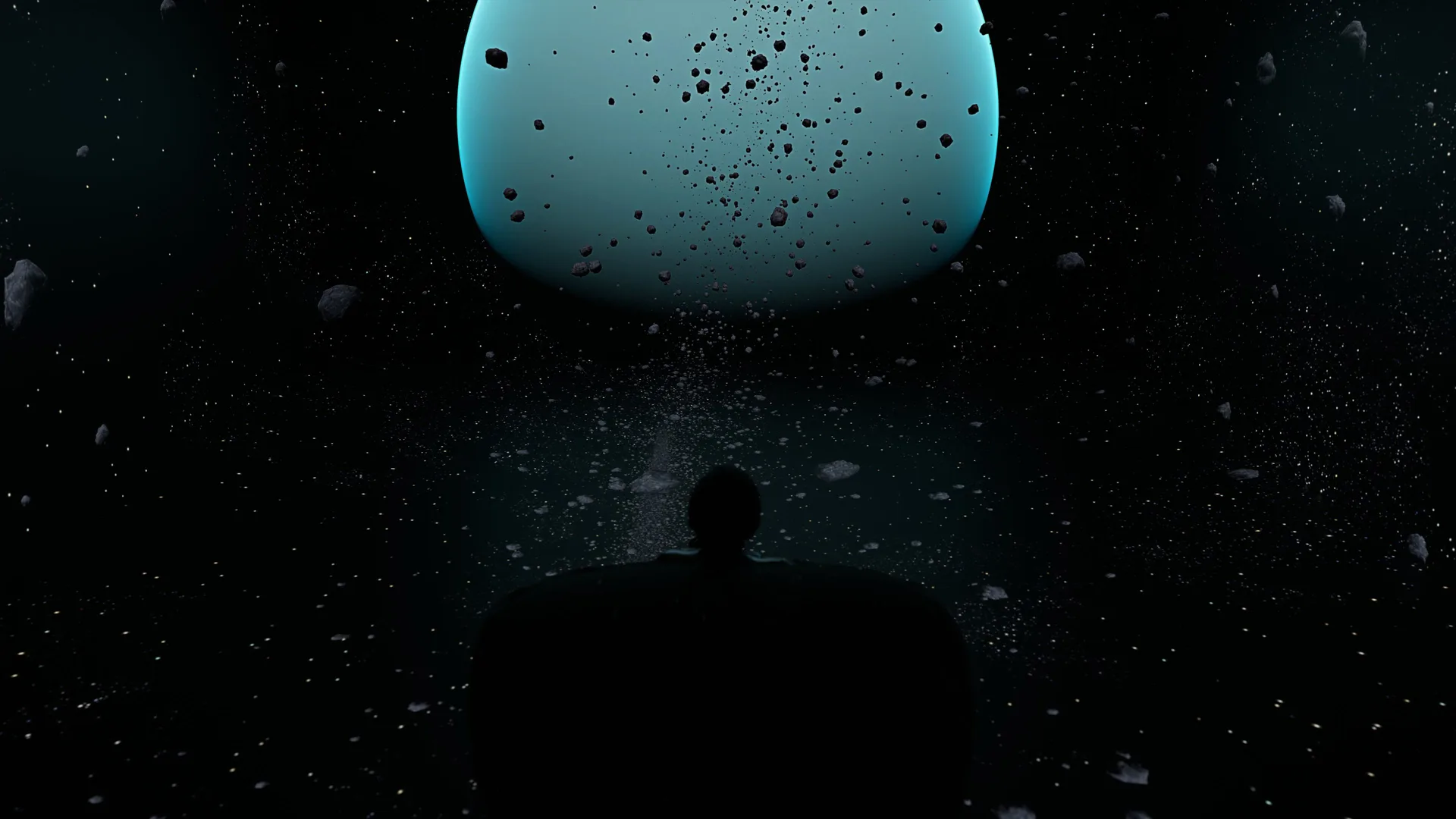
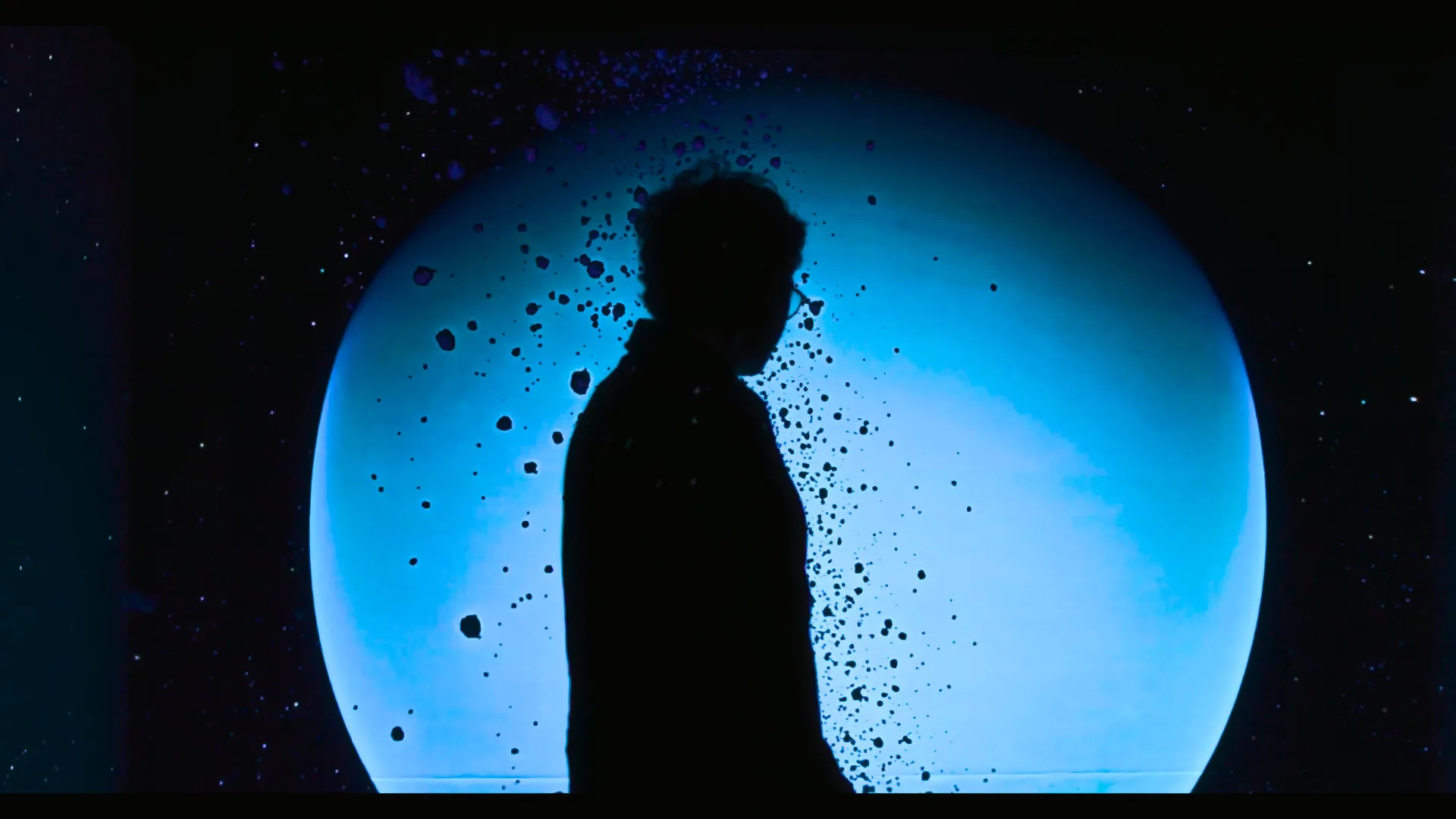
Uranus
The tilted ice giant
Discovered in 1781 by William Herschel, Uranus was the first planet ever seen through a telescope. At first it was mistaken for a star, or a comet.
03
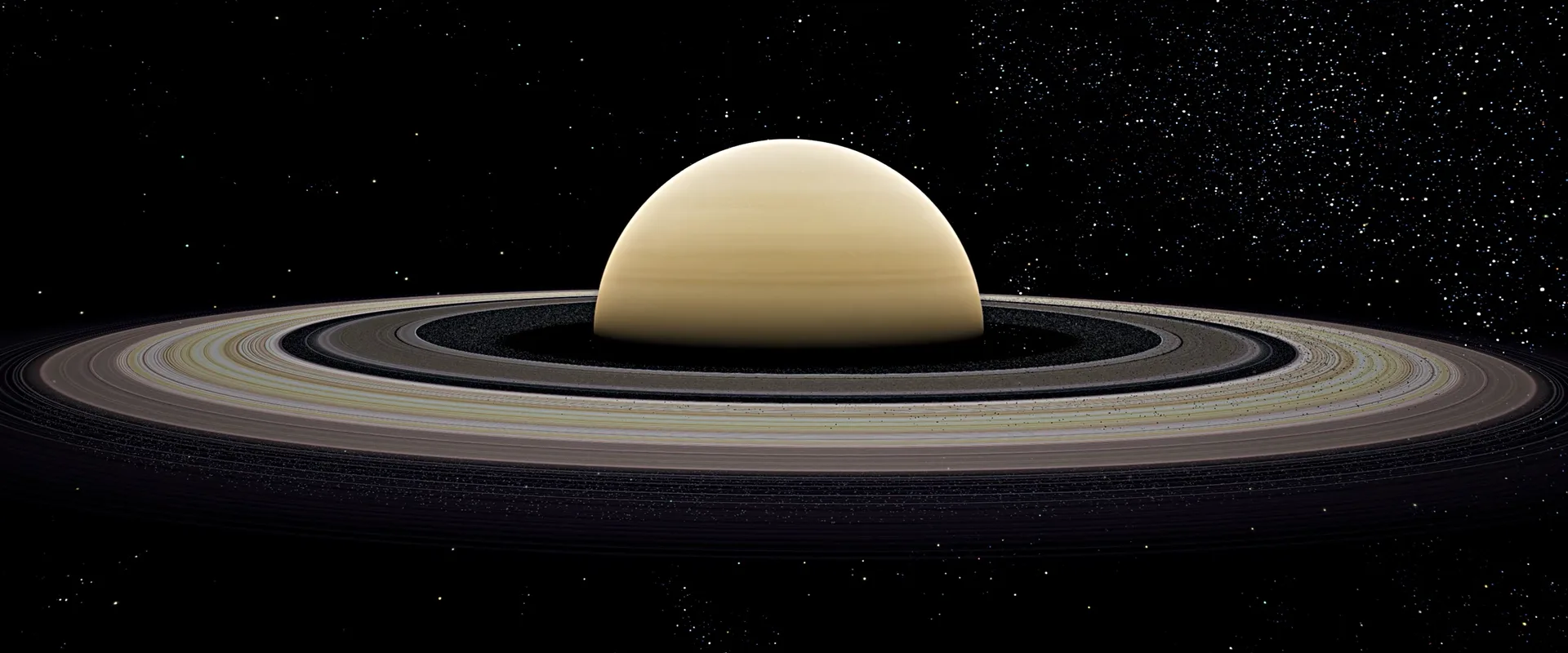
Saturn
Lord of the rings
The most magnificent crown in the sky. Its rings — seven main groups and millions of icy, rocky fragments — are a cosmic masterpiece.

drag or use the arrow keys to turn around the room
04
Jupiter
King of the Solar System
The biggest, strongest, most majestic. Its mass is about 2.5 times that of all the other planets combined, and its atmosphere hosts a storm that has raged for centuries — the Great Red Spot, once three Earths wide, now about 1.3.
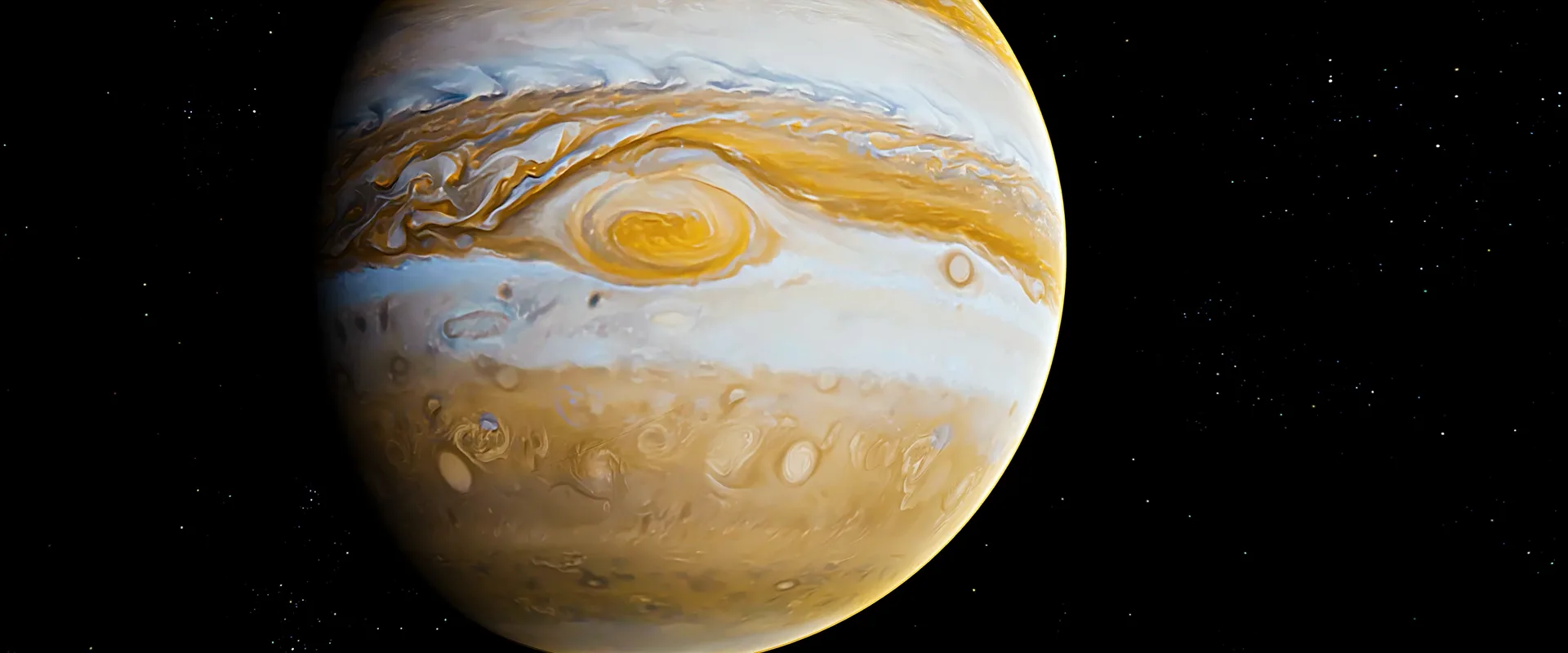

drag or use the arrow keys to turn around the room
05
Mars
Secrets of the red planet
Covered in iron oxide, red Mars takes its name from the Roman god of war. Its two small moons, Phobos and Deimos — Fear and Terror — are likely captured asteroids. Half the size of Earth, its surface area almost equals Earth's landmass.
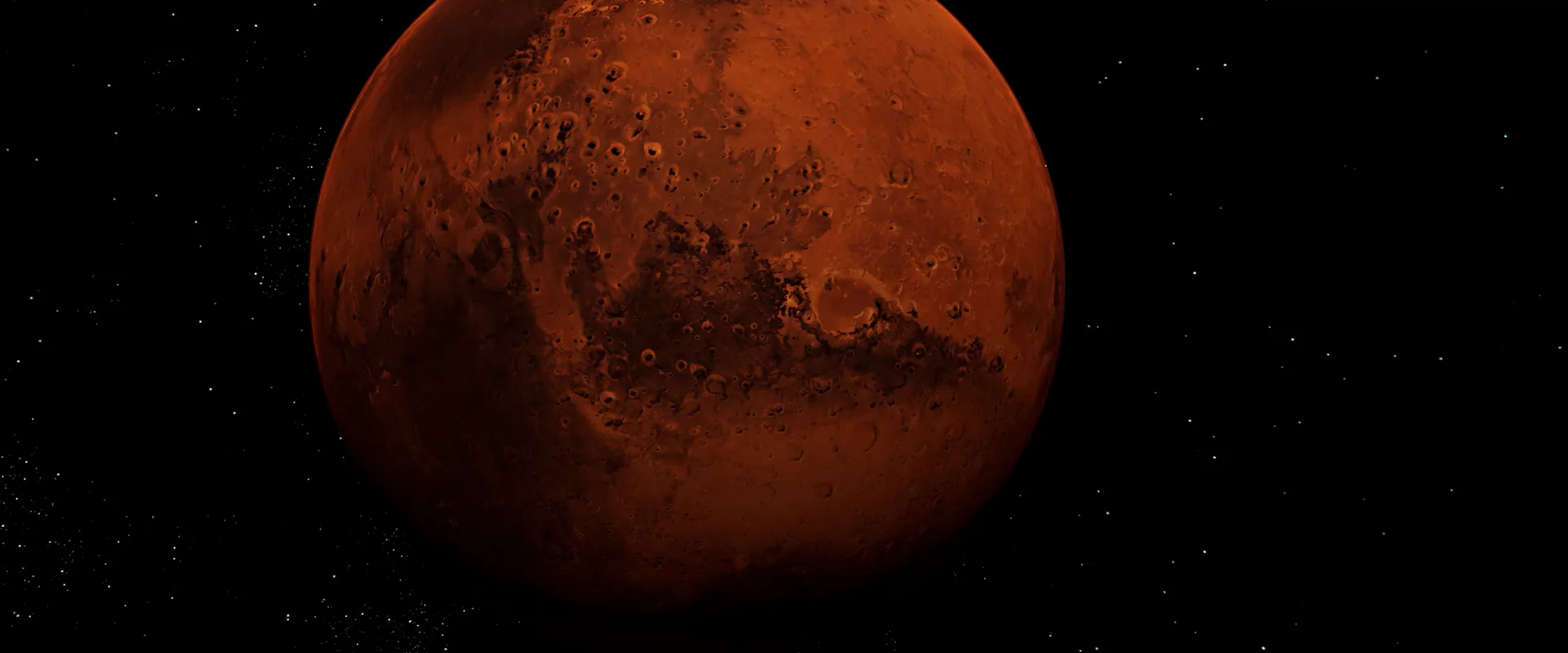

drag or use the arrow keys to turn around the room
06
Earth
The blue haven of life
Now we come to ourselves. With 71% of its surface covered by water, we call it the Blue Planet; its atmosphere of nitrogen and oxygen holds the delicate balance that lets life thrive. Its single moon drives the tides and steadies the planet's spin.
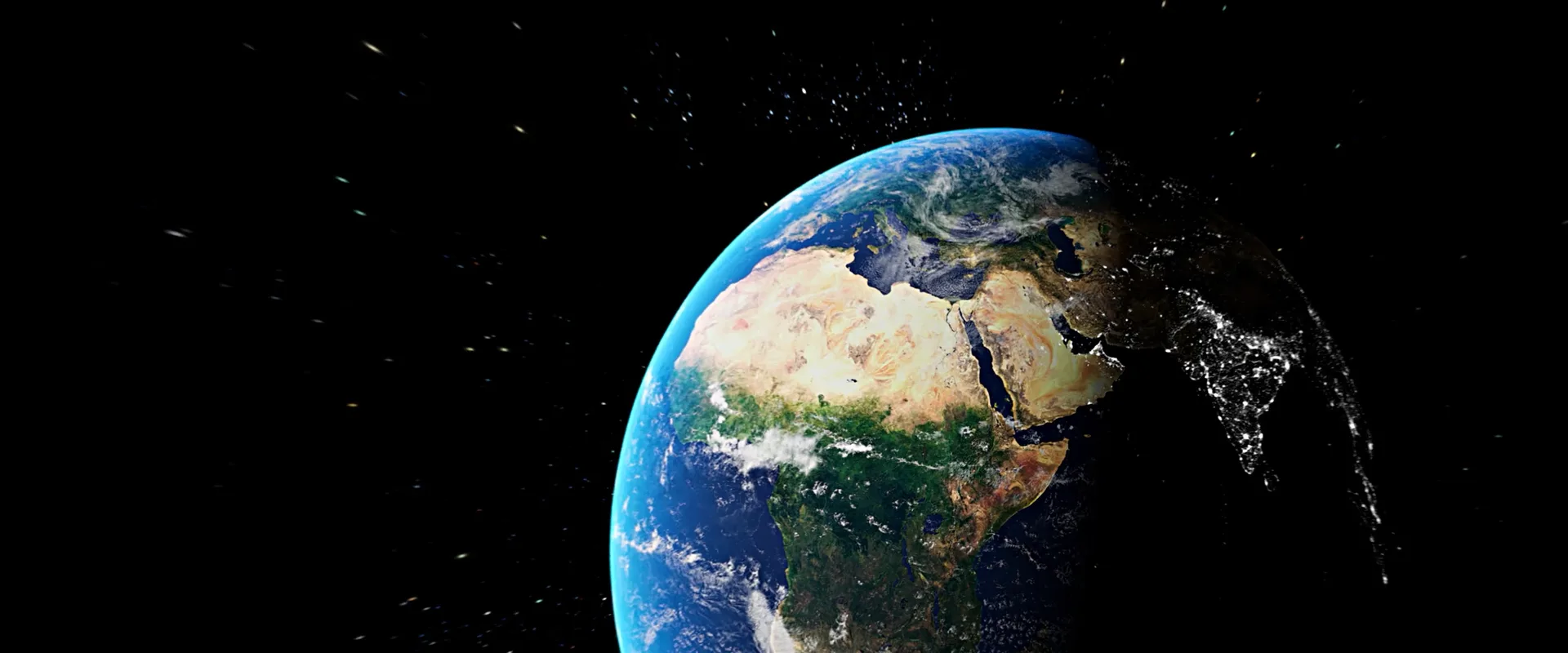

drag or use the arrow keys to turn around the room
07
Venus
The shining face of hell
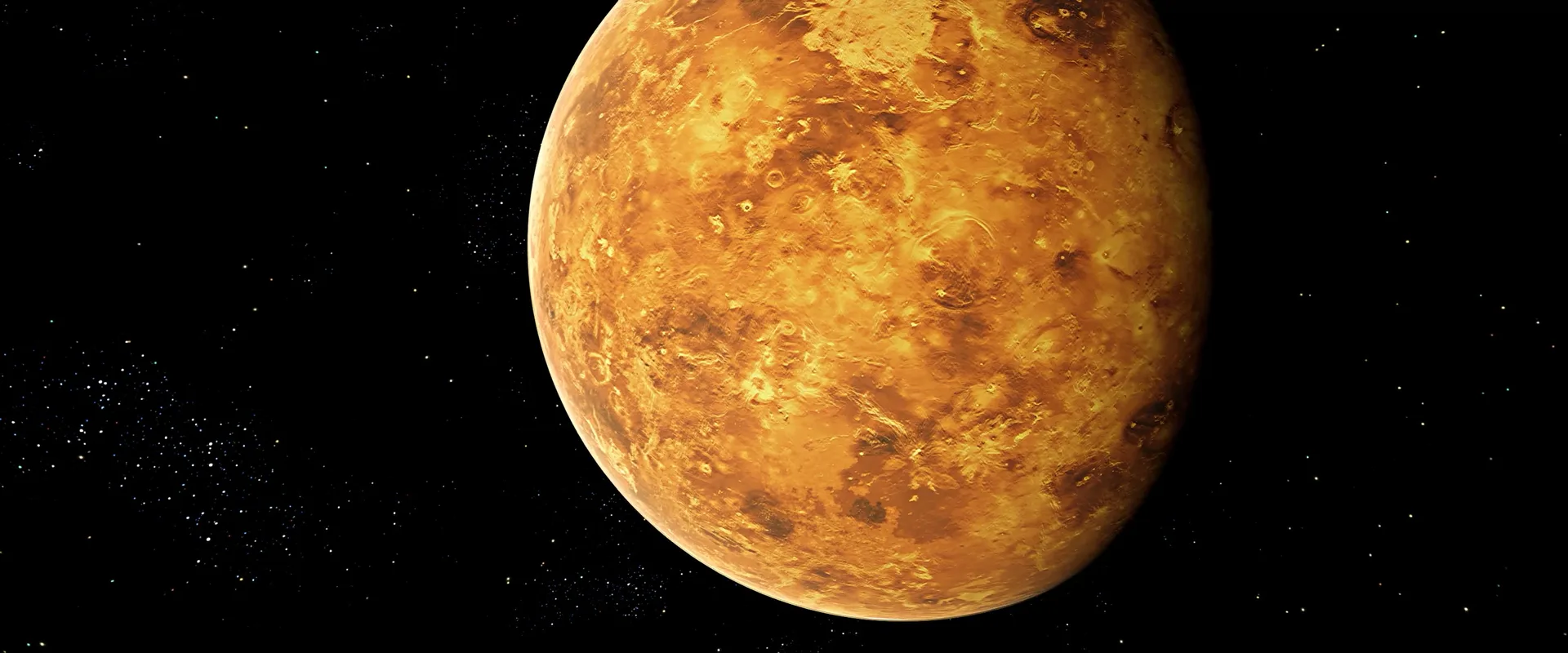
The planet most similar to Earth, yet utterly opposite. Nearly the same size, but with hellish conditions — its surface can reach 475°C.

drag or use the arrow keys to turn around the room
08
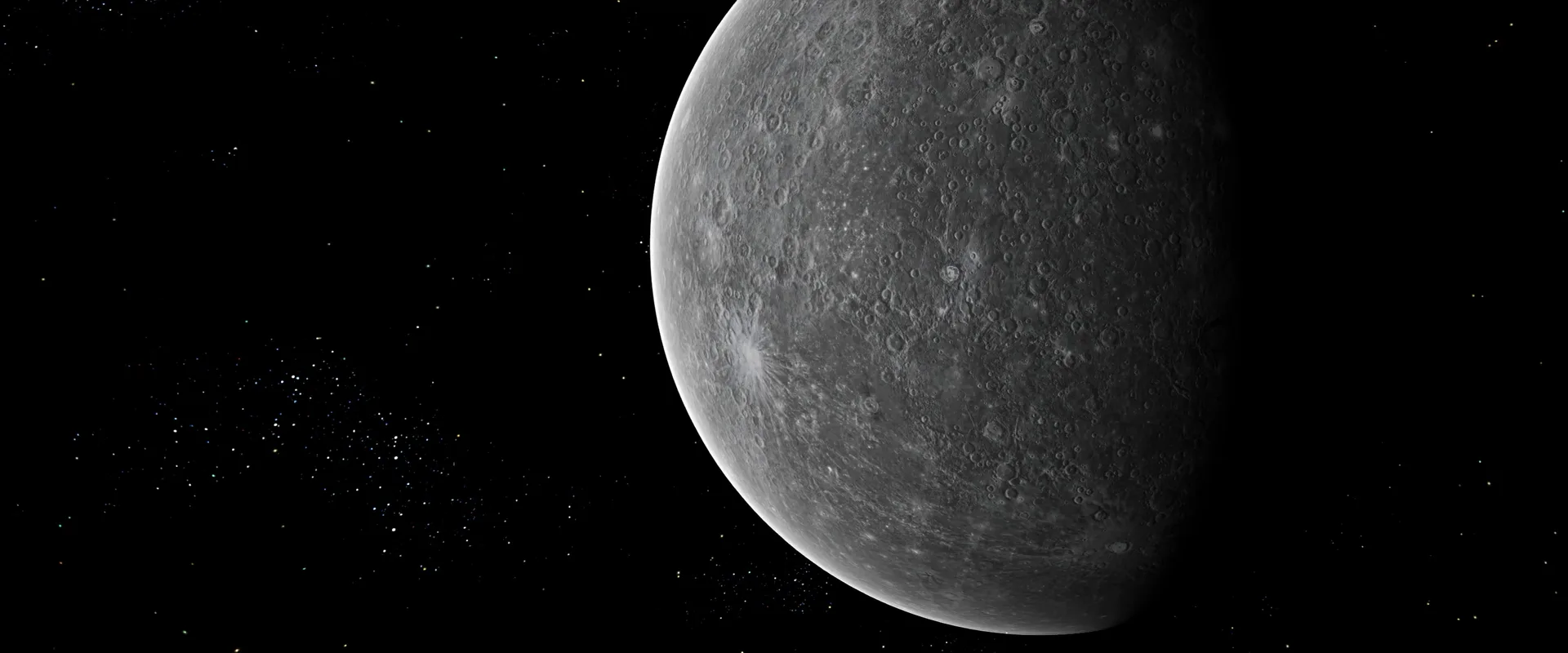
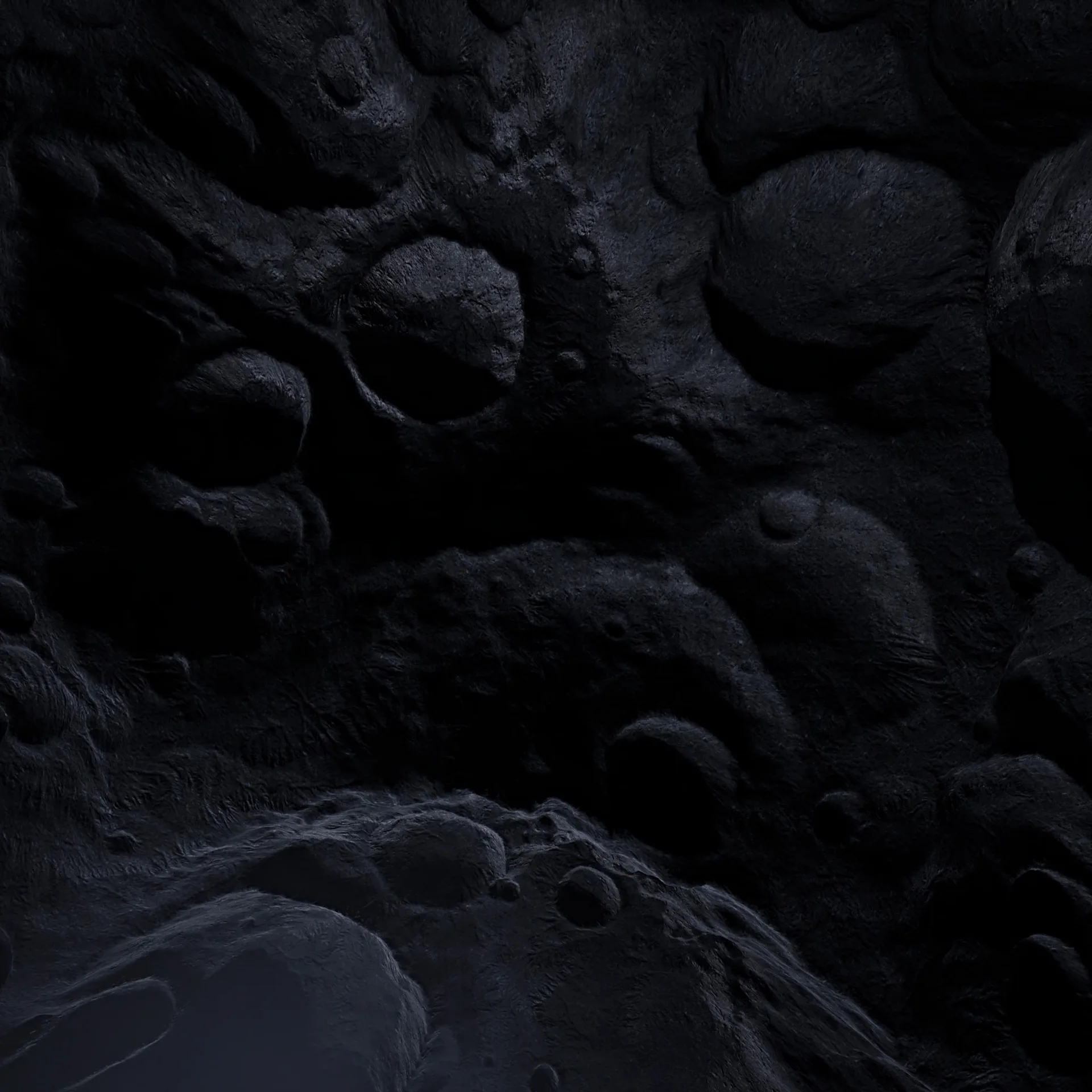
Mercury
The fiery messenger of the Sun
The smallest, closest and fastest planet. Its orbit takes just 88 days, but one Mercury day lasts 176 Earth days. Daytime temperatures reach 430°C; at night it drops to −180°C.

drag or use the arrow keys to turn around the room
09
The Sun
Source of life
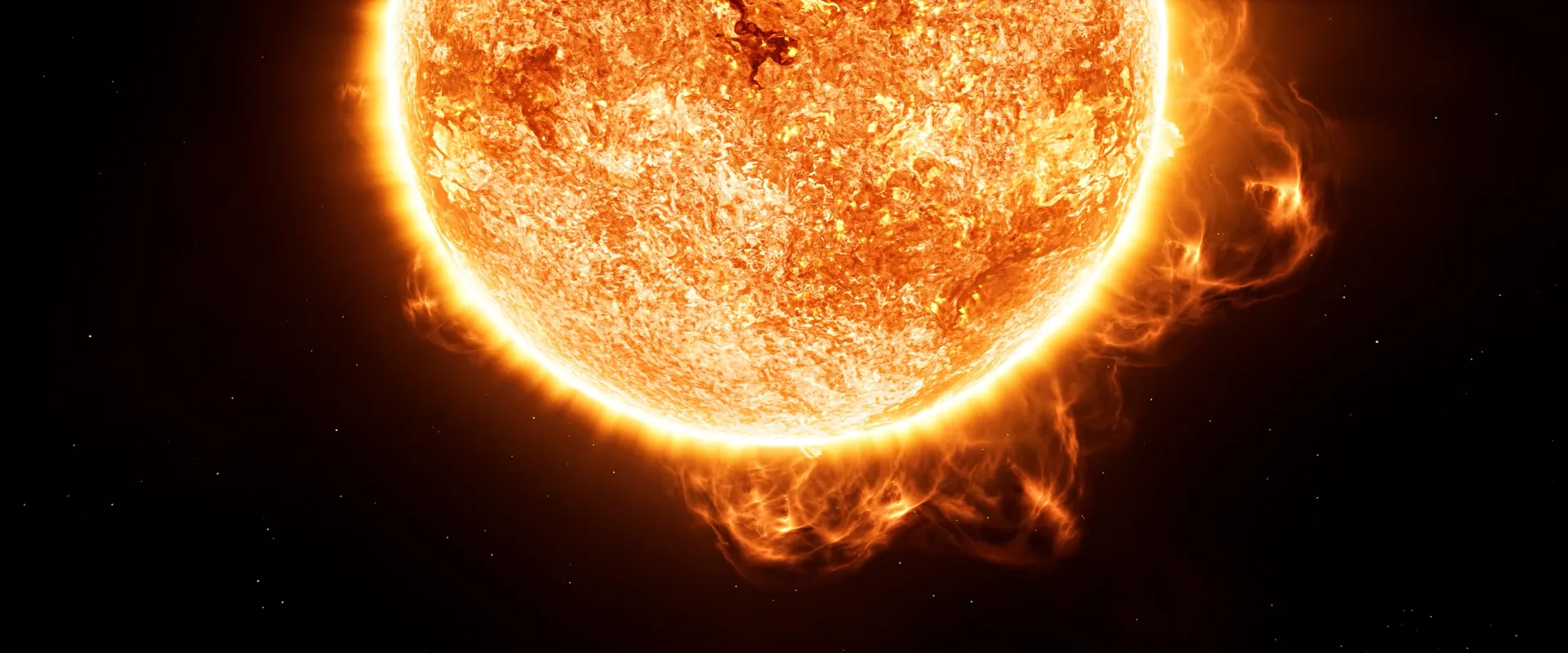
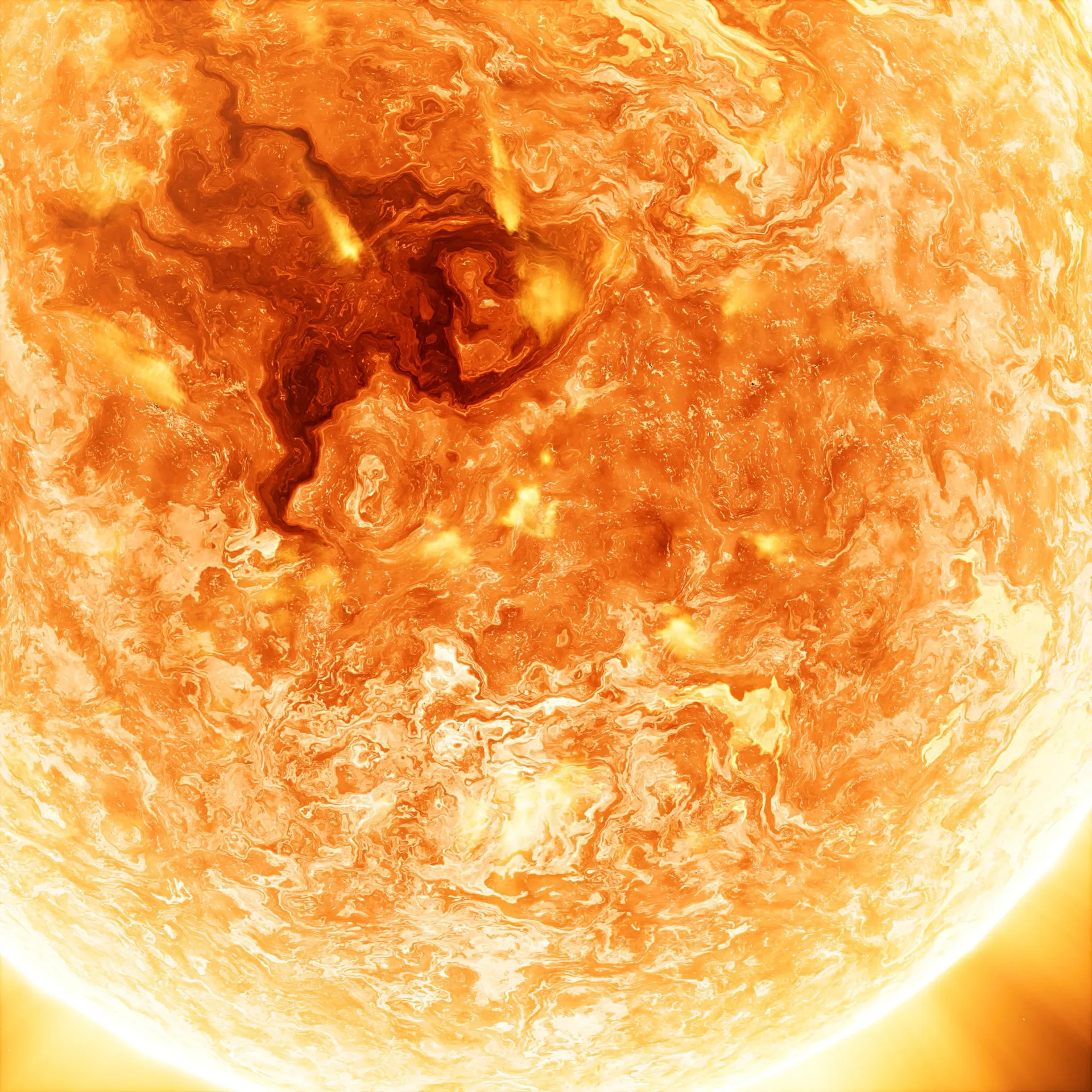
The heart of it all. It holds 99.8% of the total mass of the Solar System. Its surface is 5,500°C and its core 15 million °C; every second, millions of tons of hydrogen fuse into helium, releasing energy.

drag or use the arrow keys to turn around the room
Setup
Twelve projectors, one workstation
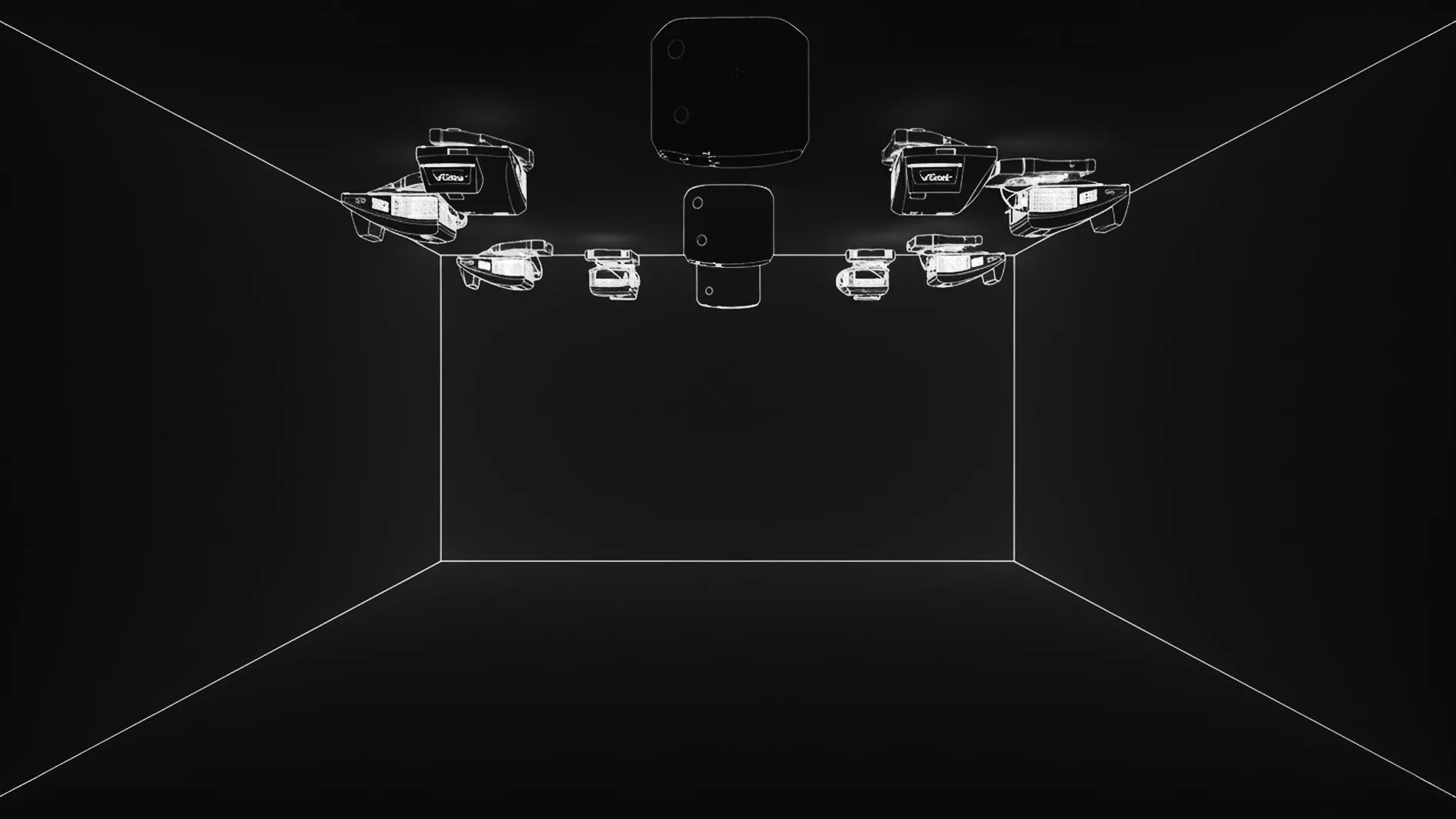
A total of twelve projectors are driven by a single workstation equipped with three GPUs, which distribute synchronised video outputs to each projector.
One machine means one clock. Every surface advances on the same frame, so the seam where the floor meets the wall never drifts — which is the difference between a room and a set of screens.
- 12
- Projectors
- 3
- GPUs
- 1
- Workstation
- 9
- Worlds
Interactive extension
A floor that answers to footsteps
The project can be adapted into a floor-based interactive installation using Kinect or other point-cloud tracking systems, allowing viewers to explore planetary environments through real-time motion and spatial interaction.