Planet Earth
A fully interactive immersive experience that presents an abstract story of Earth as a living, changing system.
The project is designed as a time-based journey, where each scene gradually transforms in rhythm, atmosphere and visual intensity. Rather than following a traditional linear narrative, the experience uses movement, light, texture and spatial interaction to create an emotional interpretation of Earth as a living and changing system.
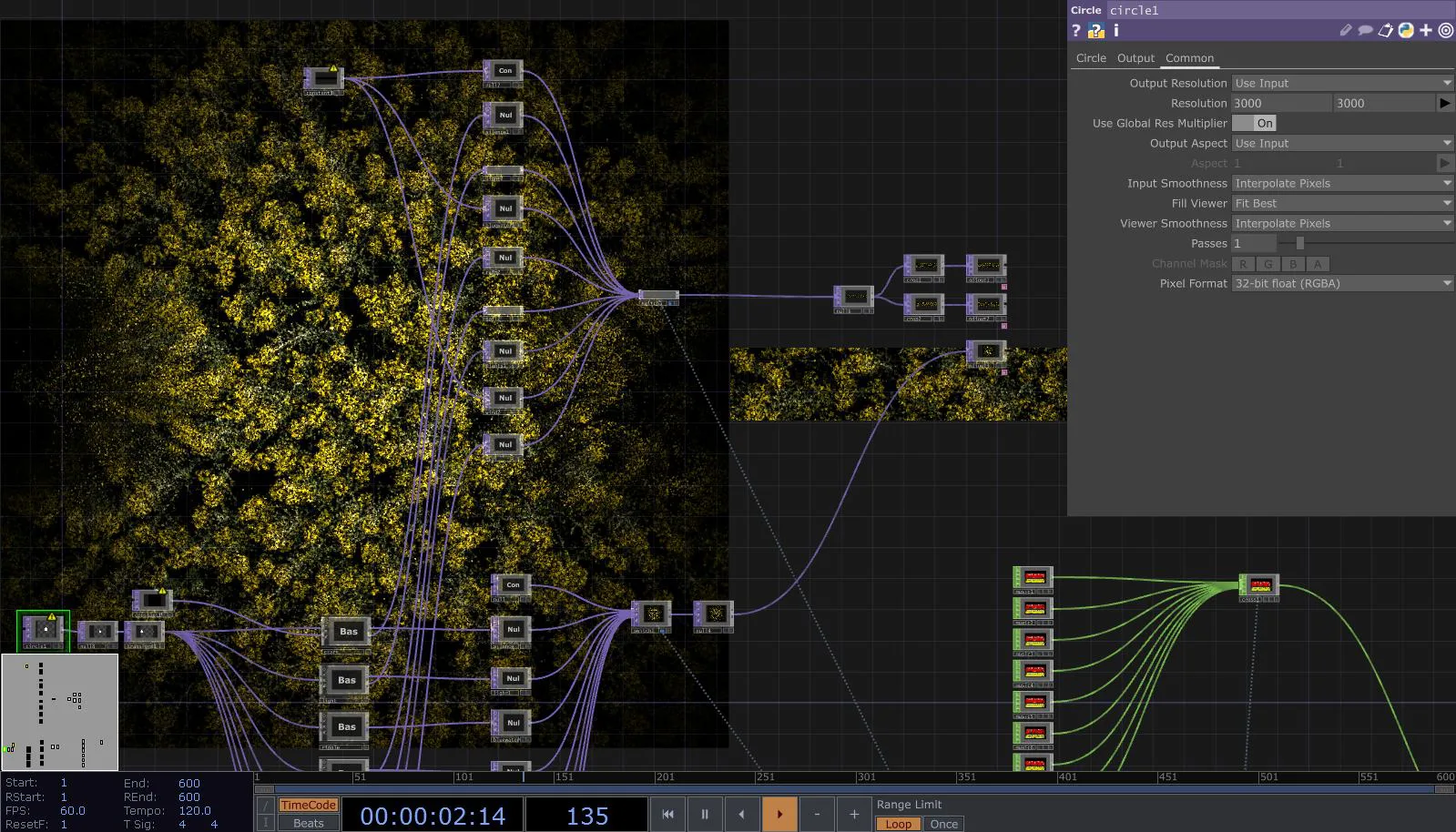
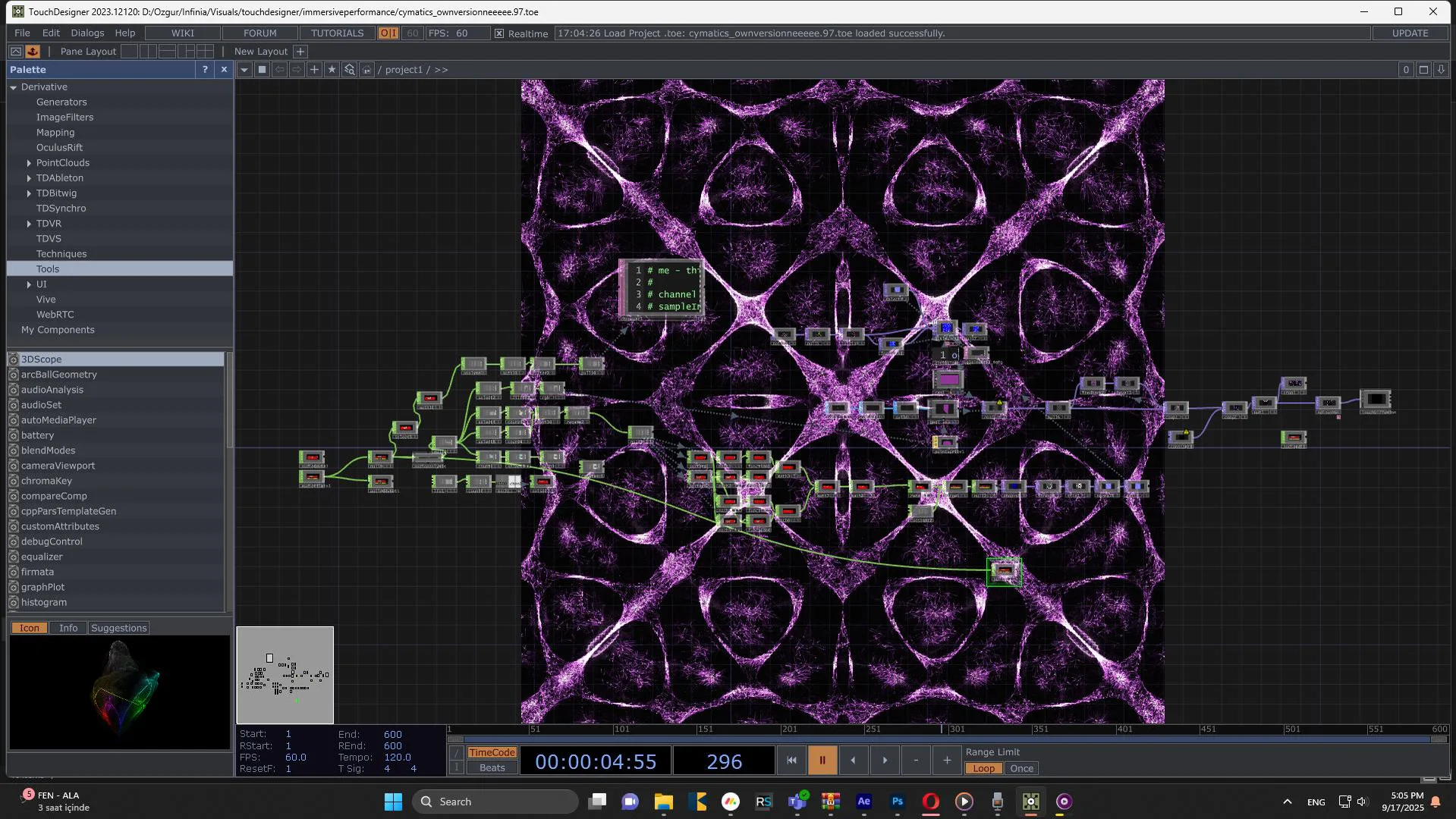
The entire project was built in TouchDesigner, allowing the visuals to evolve procedurally over time. Each scene is structured to shift automatically, creating a continuous flow between different visual states. This time-based system gives the experience a cinematic rhythm while keeping the visuals flexible, generative and responsive.
- Client
- Infinia
- Year
- 2024
- Role
- Interactive Visuals · TouchDesigner
- Tools
- TouchDesigner
- Intel RealSense
- Optical Flow
- GLSL
In the room
The floor is the story
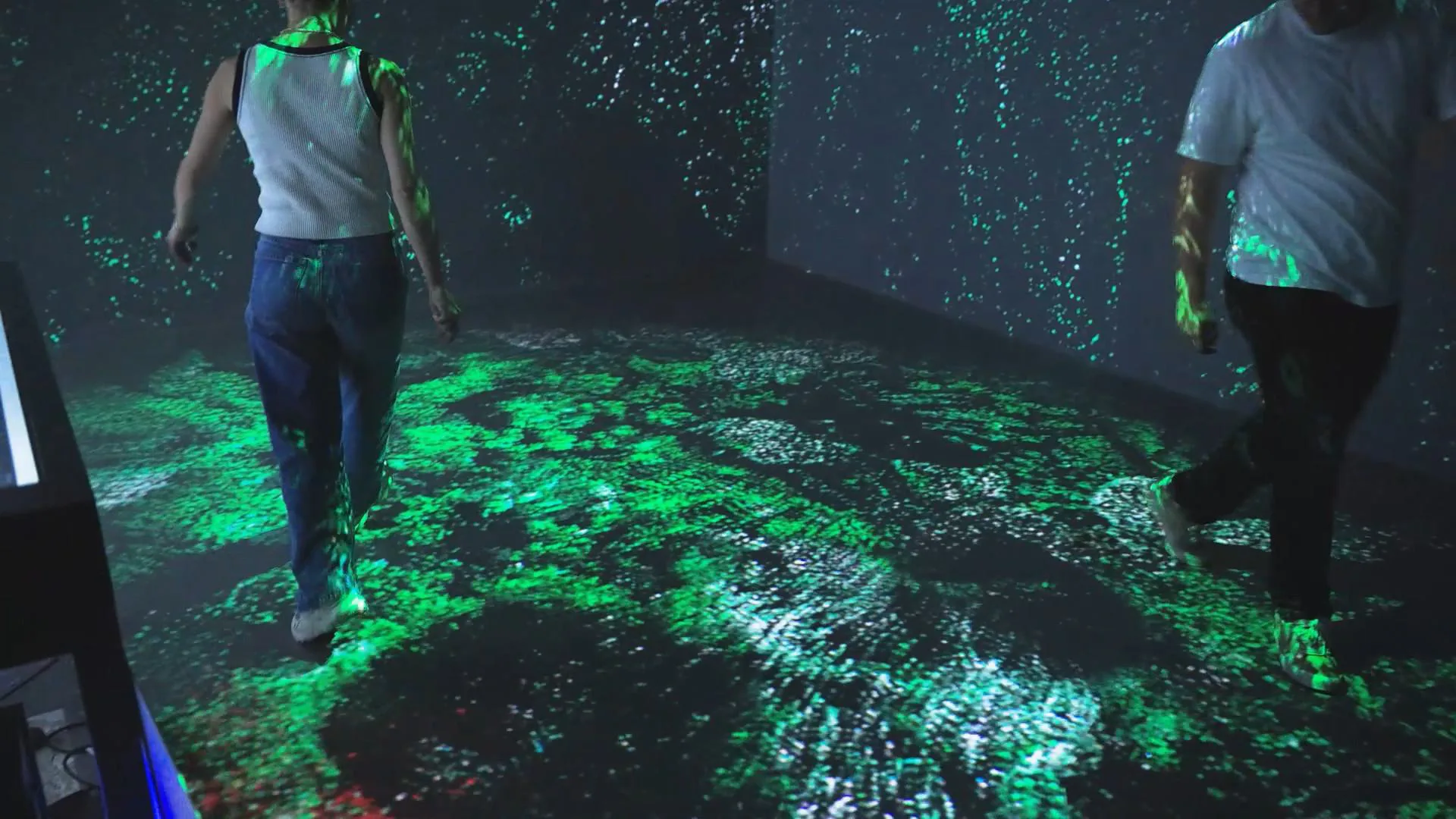
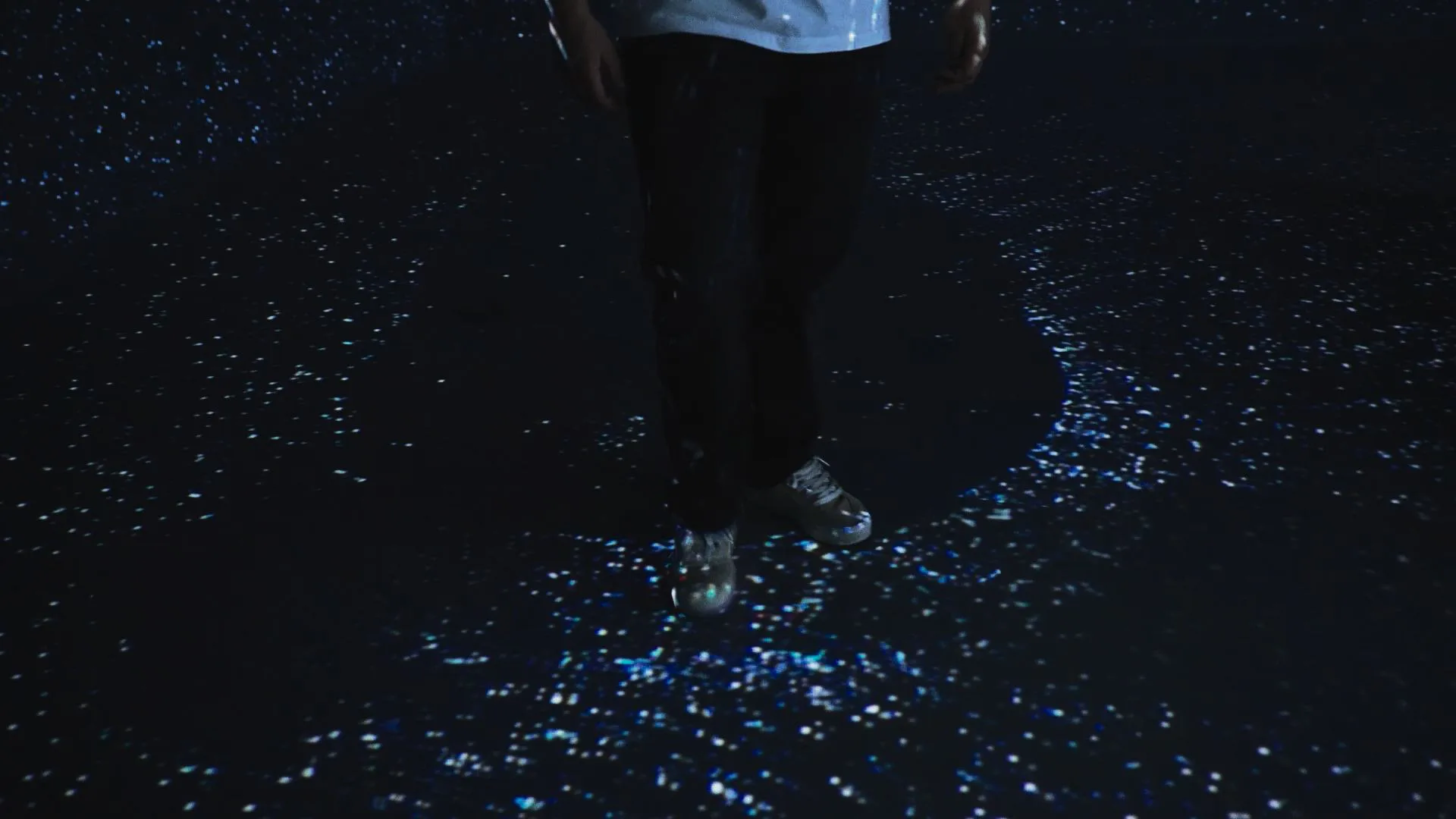
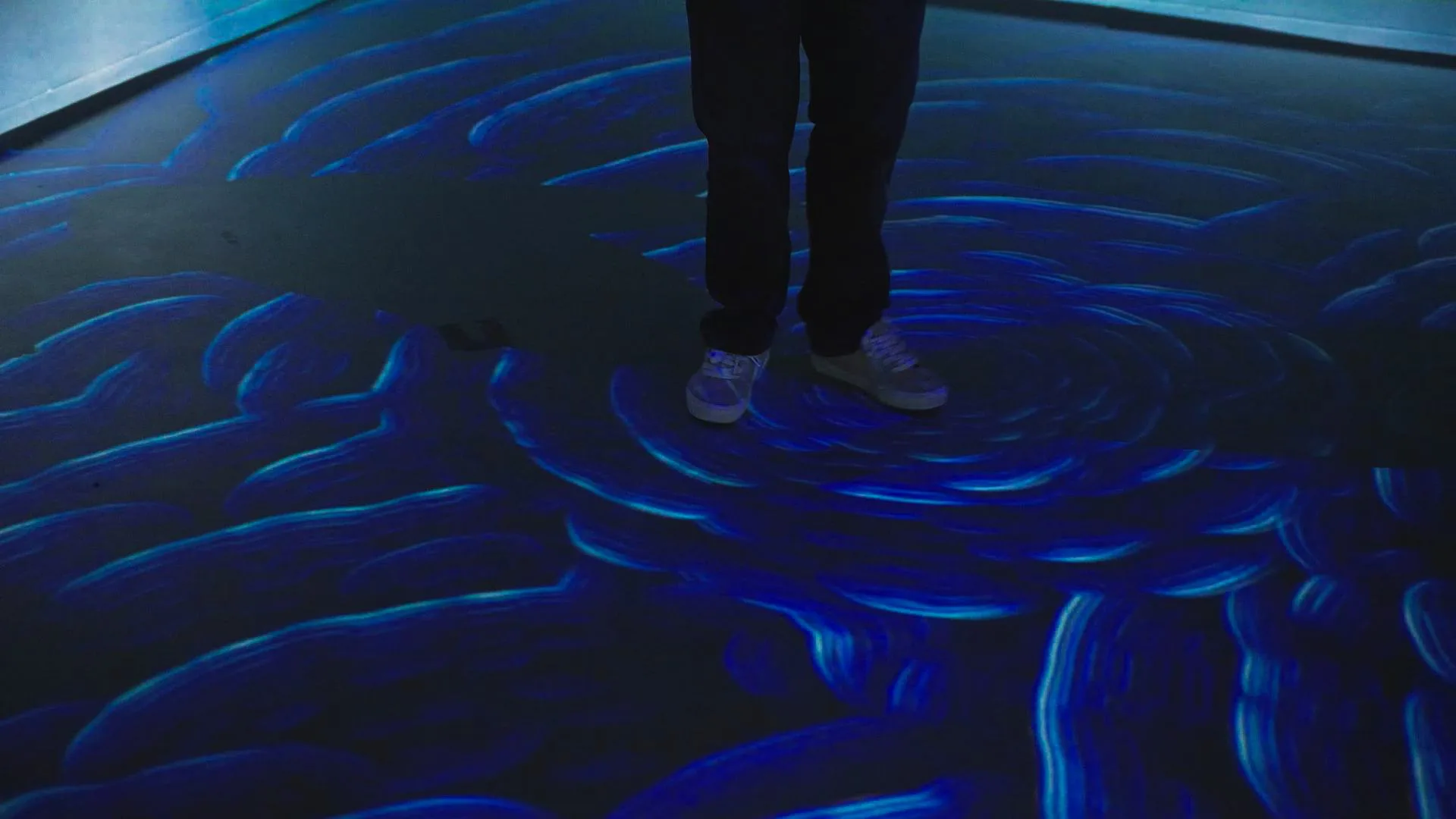
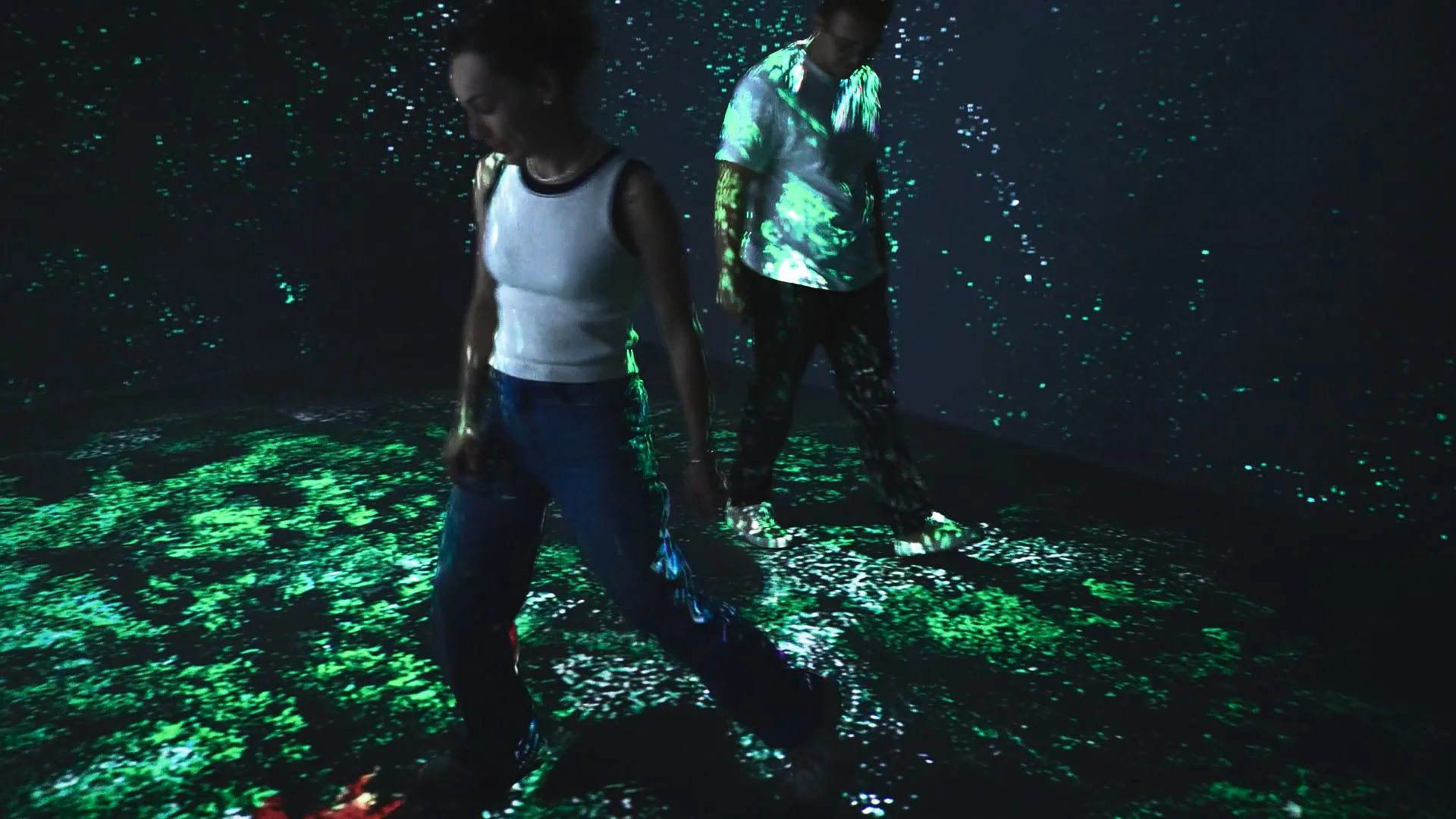
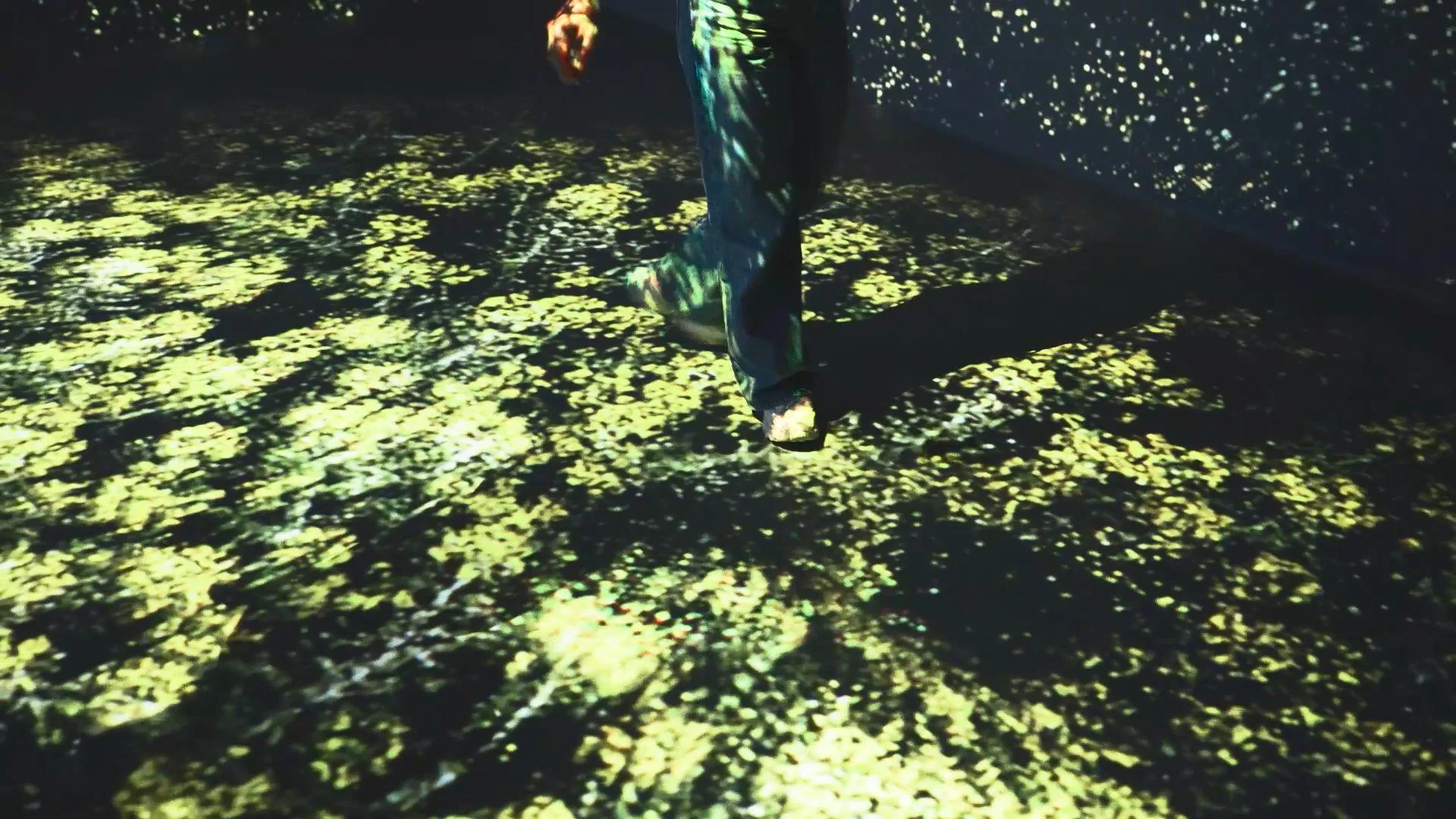
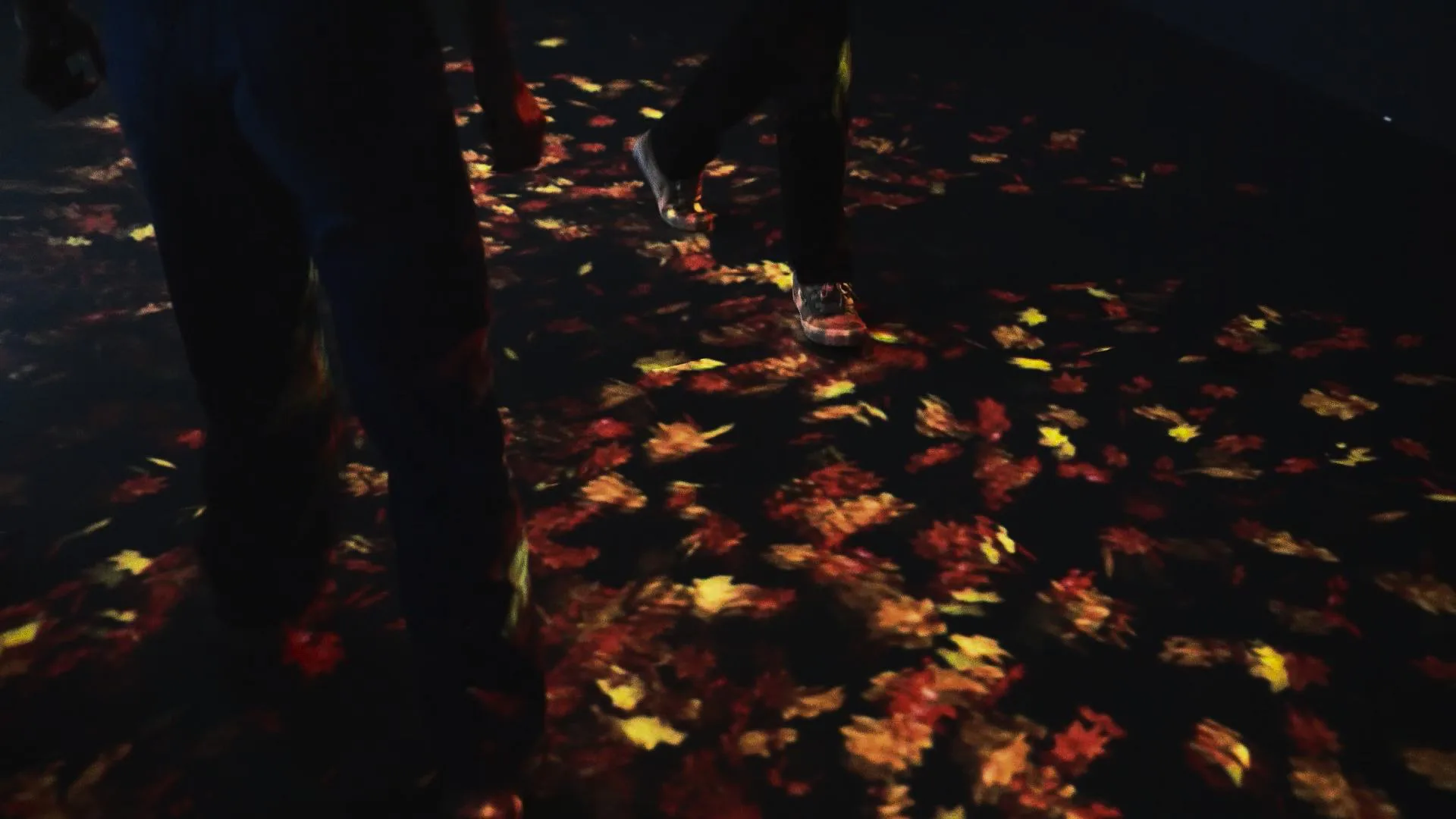
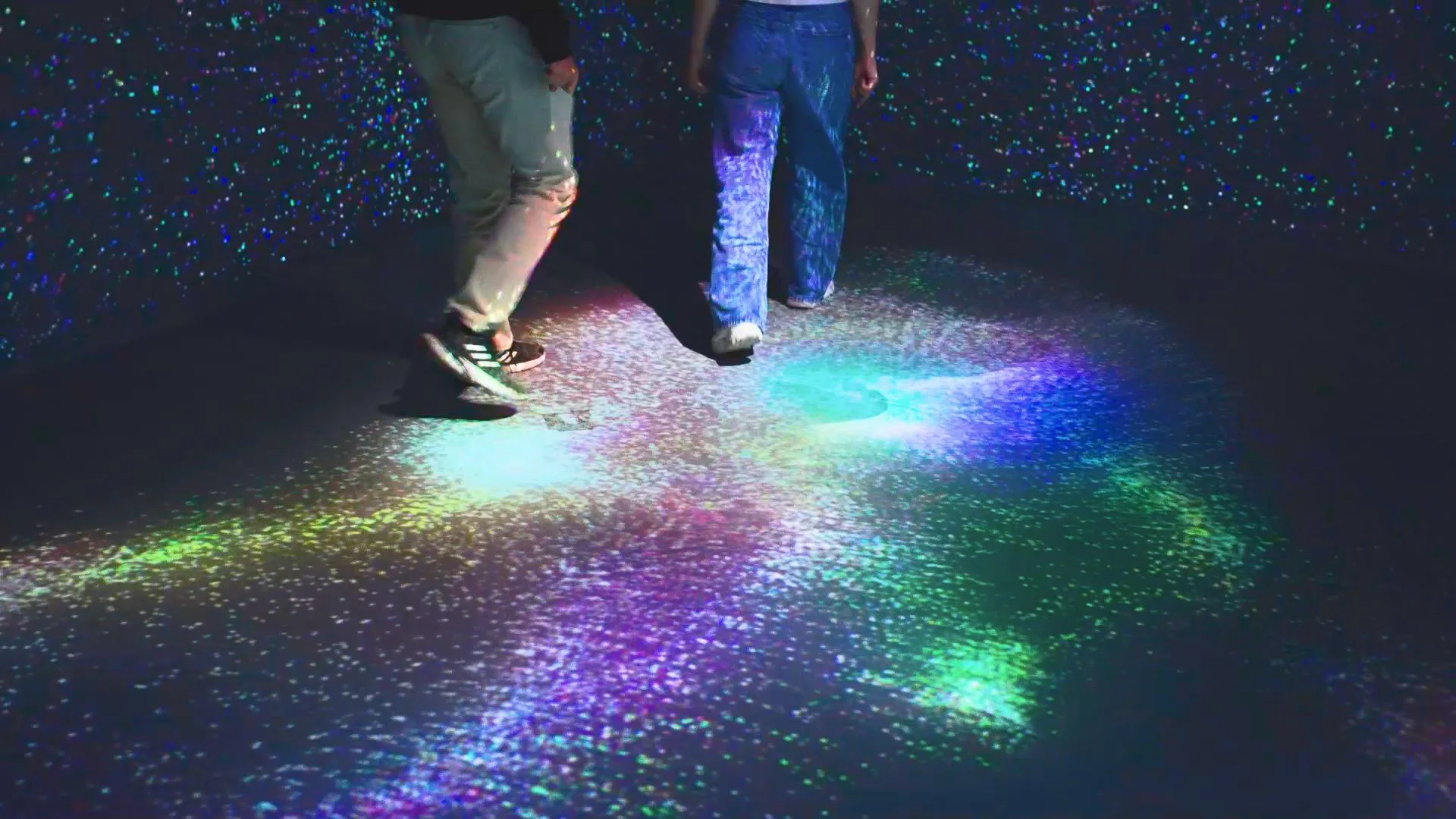
Planet Earth is played on the floor. Visitors walk on it rather than watch it: fields of particles scatter around a footstep, currents bend past whoever is standing in them, and the palette moves from particle white through green and gold to a floor of autumn leaves, on a clock of its own. There is no controller, no instruction and no right place to stand.
Interaction
A floor that knows where you are
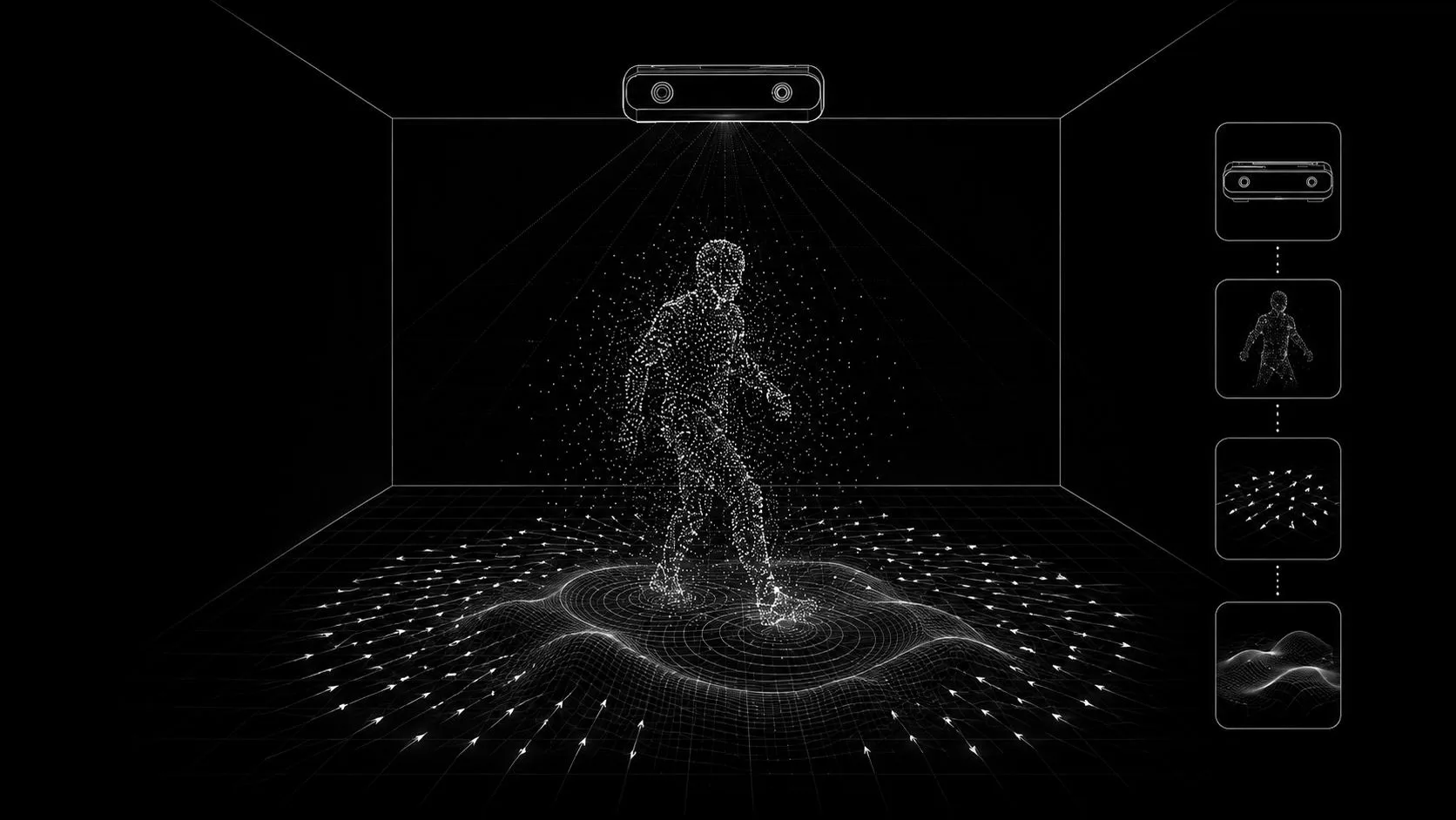
An Intel RealSense depth camera captures depth data in real time and converts it into a live 3D point cloud. Optical flow analyses movement across the floor, tracking direction and velocity, so the visuals respond instantly to the audience's presence and movement.
Because the response is computed from motion rather than from a trigger, it scales from one person to a crowd without anything changing: more people, more flow.
Workflow
Built entirely in TouchDesigner
The workflow combines audio voiceover, particle systems and real-time shader control in one TouchDesigner network. Live RealSense input drives the optical-flow states that feed the particle and shader effects, and scene changes are driven by time, so the piece runs itself for as long as the room is open.
Setup
Twelve projectors, one workstation, one camera
Twelve projectors are driven by a single workstation equipped with three GPUs, which distribute synchronised video outputs to each projector; the depth camera feeds the same machine, so tracking and rendering never drift apart.
- 12
- Projectors
- 3
- GPUs
- 1
- Workstation
- 1
- Depth camera